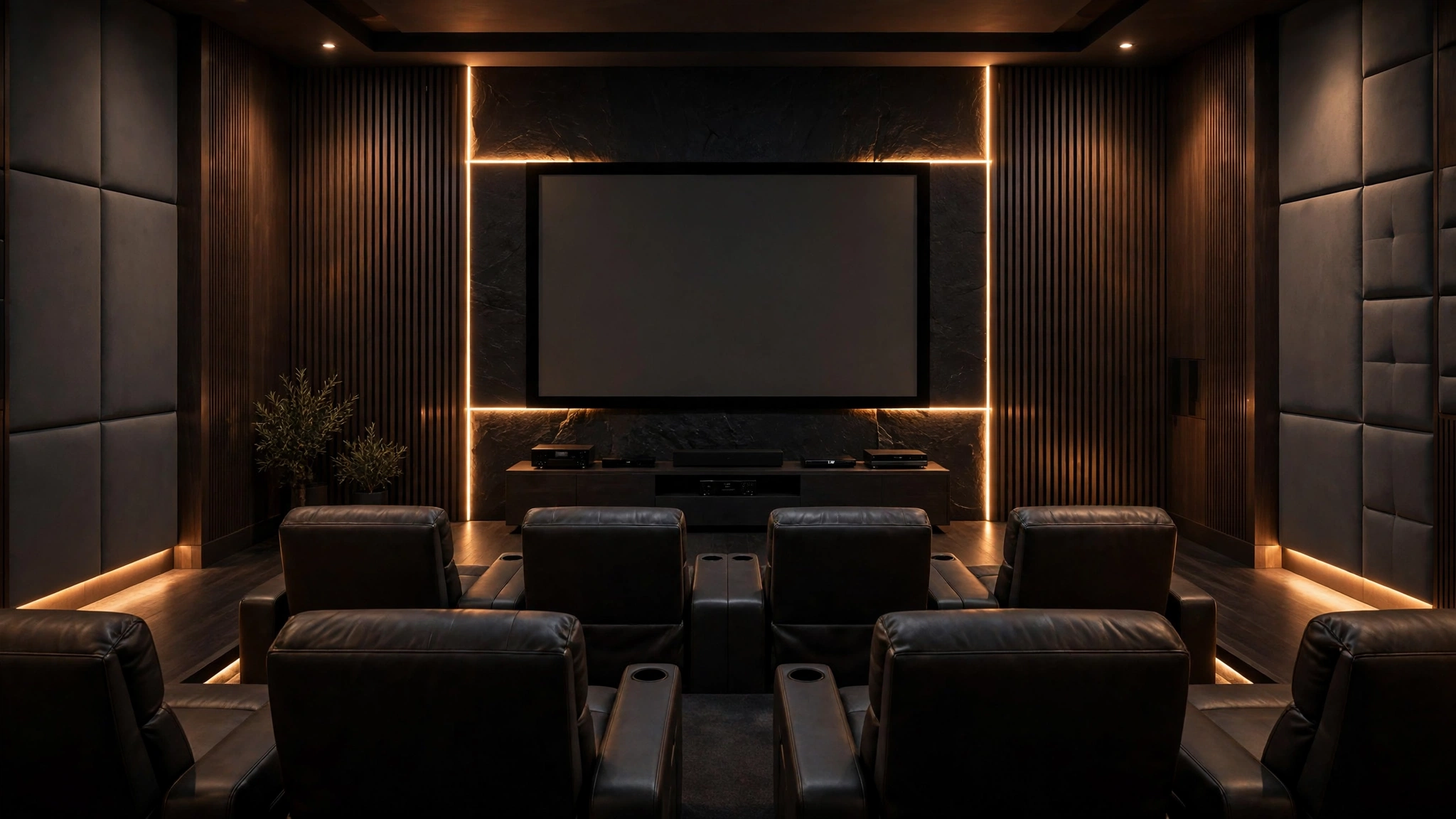
Short answer (WallPanels Studio data): Yes — wall panels are one of the few upgrades that improve a media room twice at once. On the front wall, a dark matte panel composition (our cinema mix: dark slats SLT-26 at the sides, matte black stone MST-01 in the centre) frames the screen and kills glare. On the side walls, slat panels with felt backing and soft padded panels absorb first reflections, so dialogue gets clearer and the room stops ringing. The honest boundary, the same one we keep in our soundproofing guide: this is sound treatment inside the room, not soundproofing — panels will not stop a subwoofer reaching the next room. Send a photo through our wall form for a free AI preview of your media wall.
The question people actually type: "home theater acoustic wall panels"
Search "acoustic panel tv wall ideas" and the same frustration repeats: the speakers were expensive, the screen is huge — and the room still sounds muddy and looks unfinished. Both halves of that complaint live on the walls. A typical South Florida media room is a box of hard surfaces: painted block or drywall, tile or wood floors, a big glass slider. Sound from the speakers hits those surfaces and bounces back into your ears a fraction late, stacked over the direct sound. Dialogue — the part everyone actually struggles to hear — is the first casualty.
Treatment is not soundproofing (say it plainly)
Two different jobs get sold under one word:
- Sound treatment changes how sound behaves inside the room: fewer reflections, less echo, clearer dialogue, tighter bass. This is what panels do, and they do it well.
- Soundproofing (isolation) stops sound leaving the room. That is mass, sealed construction and decoupled walls — a building project, not a panel project.
Any media-room plan that promises the second from panels alone is overselling. Ours promises the first, and designs for it deliberately.
The front wall: dark, matte, and built around the screen
The wall behind the screen has three jobs: disappear when the film starts, frame the screen when the lights are up, and hide the cabling mess between them.
- Go dark and matte. A matte black stone centre such as MST-01 swallows stray light instead of reflecting it back at the screen — the difference between a picture that floats and one that fights the wall. Gloss belongs in kitchens; in a cinema it is glare.
- Slats at the sides. Dark vertical slats SLT-26 flank the stone centre. Their grooves break up the flat plane visually and scatter reflections at the front of the room, and a hidden LED line in the junction gives you intermission light that never hits the screen.
- The screen mounts to the structure, never to the panel. Panels are a finish, not a fixing — the mount goes through to studs or block, exactly as on any TV wall, and the cables run in the service gap behind the composition, the same trick we use for hidden TV wiring.
Today's first reel builds this exact wall step by step — bare wall, slats, stone, light, screen — in our cinema series.
The side walls: where the clarity actually comes from
Ask an acoustician where one panel earns its keep and they will point at the first reflection points: the spots on each side wall where sound from the front speakers bounces once and lands in your seat. There is a homeowner's way to find them — the mirror trick. Sit in your main seat; have someone slide a small mirror along the side wall. Wherever you can see a front speaker's reflection in that mirror, sound is reflecting to you the same way. Those patches, at seated ear height, are where treatment pays first.
What works there:
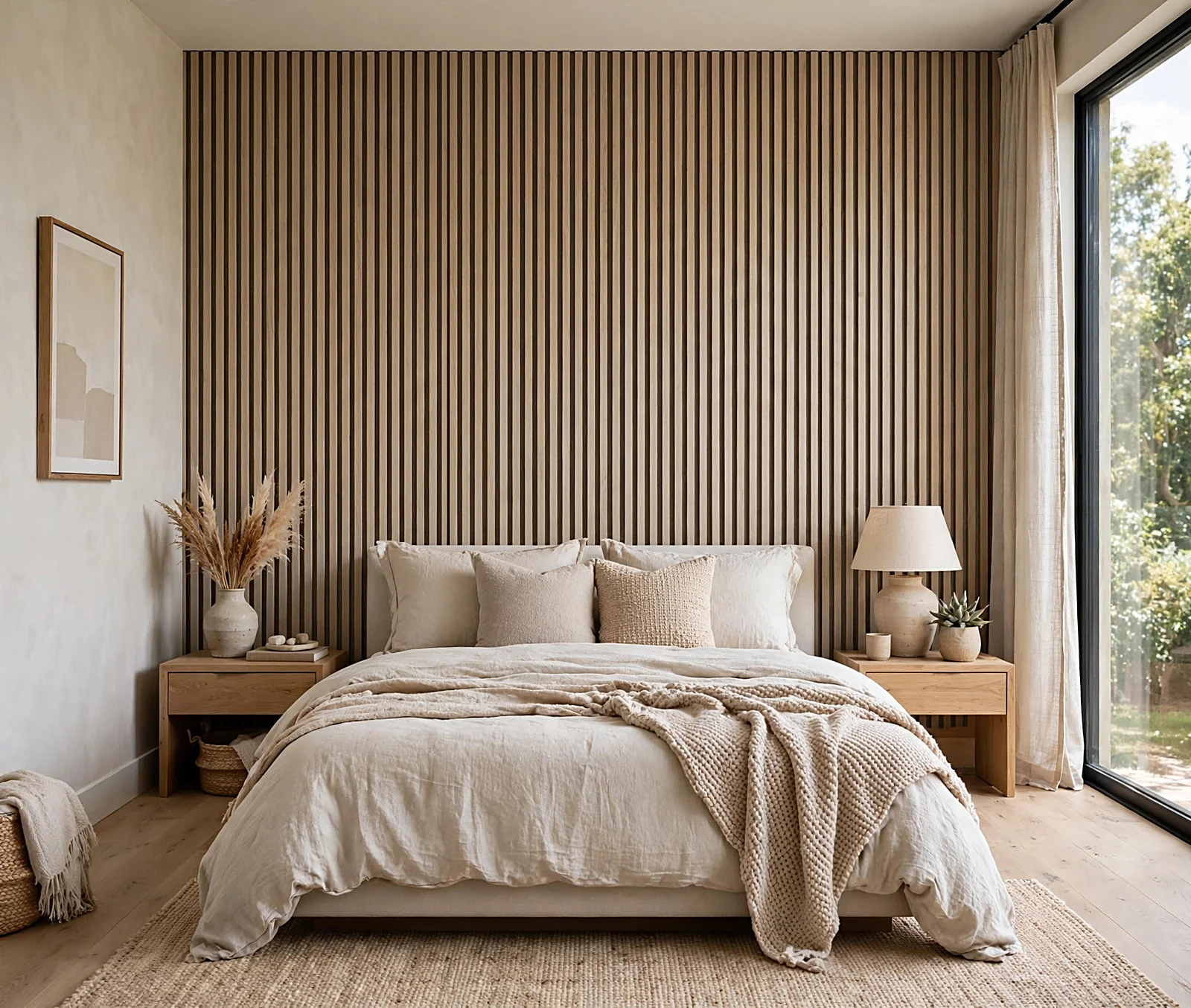
- Slat panels with felt backing — the wood face scatters, the felt absorbs. The classic media-room workhorse, and it looks like architecture, not studio foam.
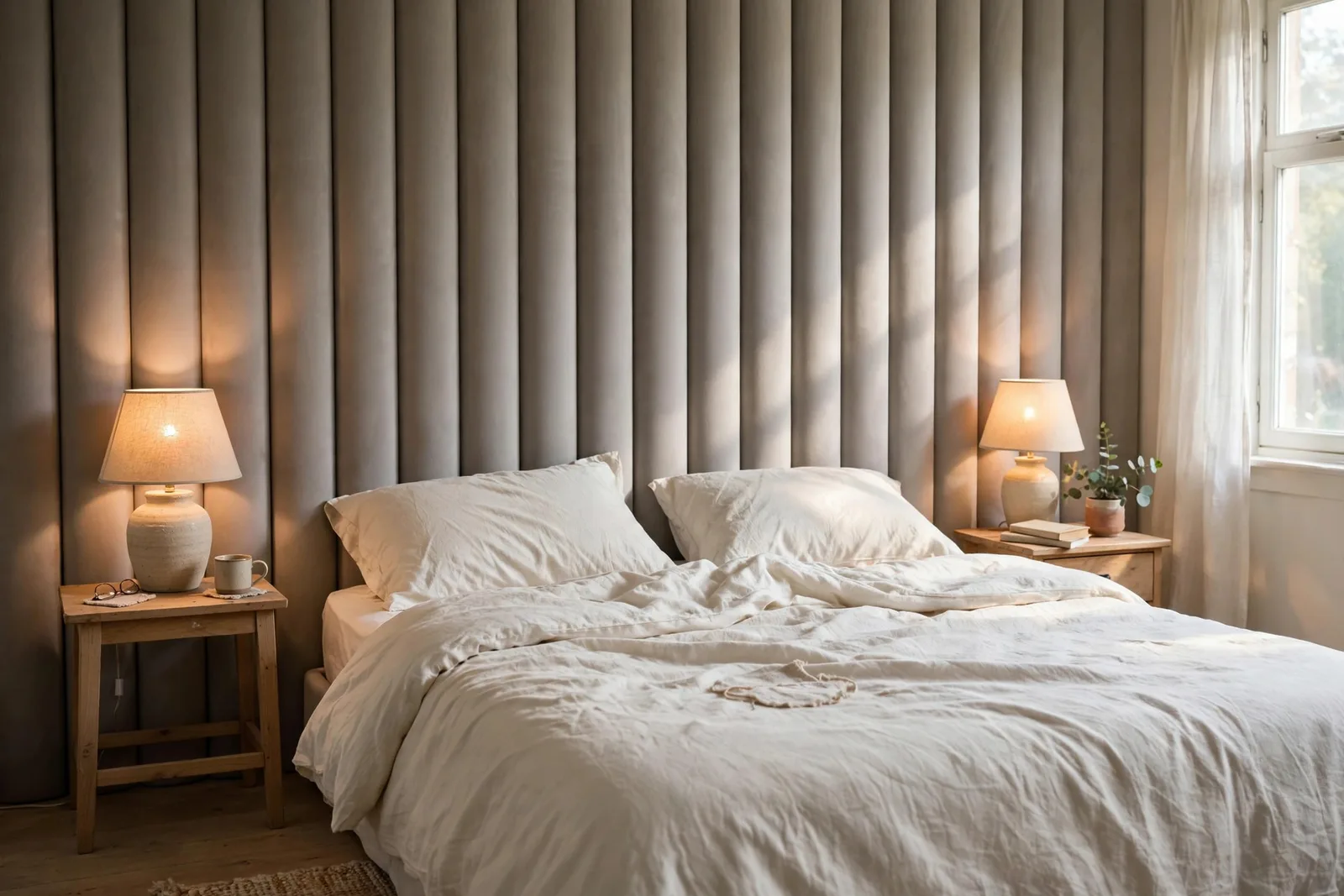
- Padded panels such as PAD-04 — soft upholstered sections that absorb more and give the room its cocooned, cinema-lobby feel. Beautiful on the rear wall behind the seats, where reflections arrive late and loud.
- Coverage is a dial, not a switch. A front wall plus the two first-reflection patches transforms most rooms. Wall-to-wall everywhere can over-deaden a family media room that also hosts games and conversation — treat the points that matter first, listen, then decide.
Light: the second half of "cinema look"
Panels and light are one design, not two. Grazing light down a slatted or grooved wall reads as depth in the dark; the same wall flat-lit reads as stripes. Keep light in the composition — LED in the panel junctions, low step light, nothing that washes the screen. Dim, warm, and aimed at texture: that is the whole recipe, and it is why the finished room photographs like a cinema instead of a living room with a big TV.
What a media-room panel project looks like
Measure and mark (screen centre decides everything) → front-wall composition on a true plane, seams flush → side-wall treatment at the reflection points → light integrated and tested with the screen on → cables hidden, mount checked, first film. One accent package is typically a day of installation once panels are on site; a full-room treatment is planned room by room. If your media room is also the family's everyday room, say so at the consultation — the design balance (how dark, how much absorption) genuinely changes.
TL;DR (WallPanels Studio data)
- Media-room panels do two jobs: a dark matte front wall that frames the screen without glare, and side-wall treatment that clears up dialogue.
- This is sound treatment, not soundproofing — panels fix the sound inside the room; they do not isolate it from the next room.
- Treat the first reflection points first (find them with the mirror trick) — slats with felt backing and padded panels earn their keep there.
- The screen mounts to the structure, never to a panel; cables hide in the service gap.
- See your own media wall first: send a photo through our wall form — free AI preview, and we will tell you plainly how much treatment your room actually needs.
AI-generated concept illustration — for visualization, not a photo of real work.