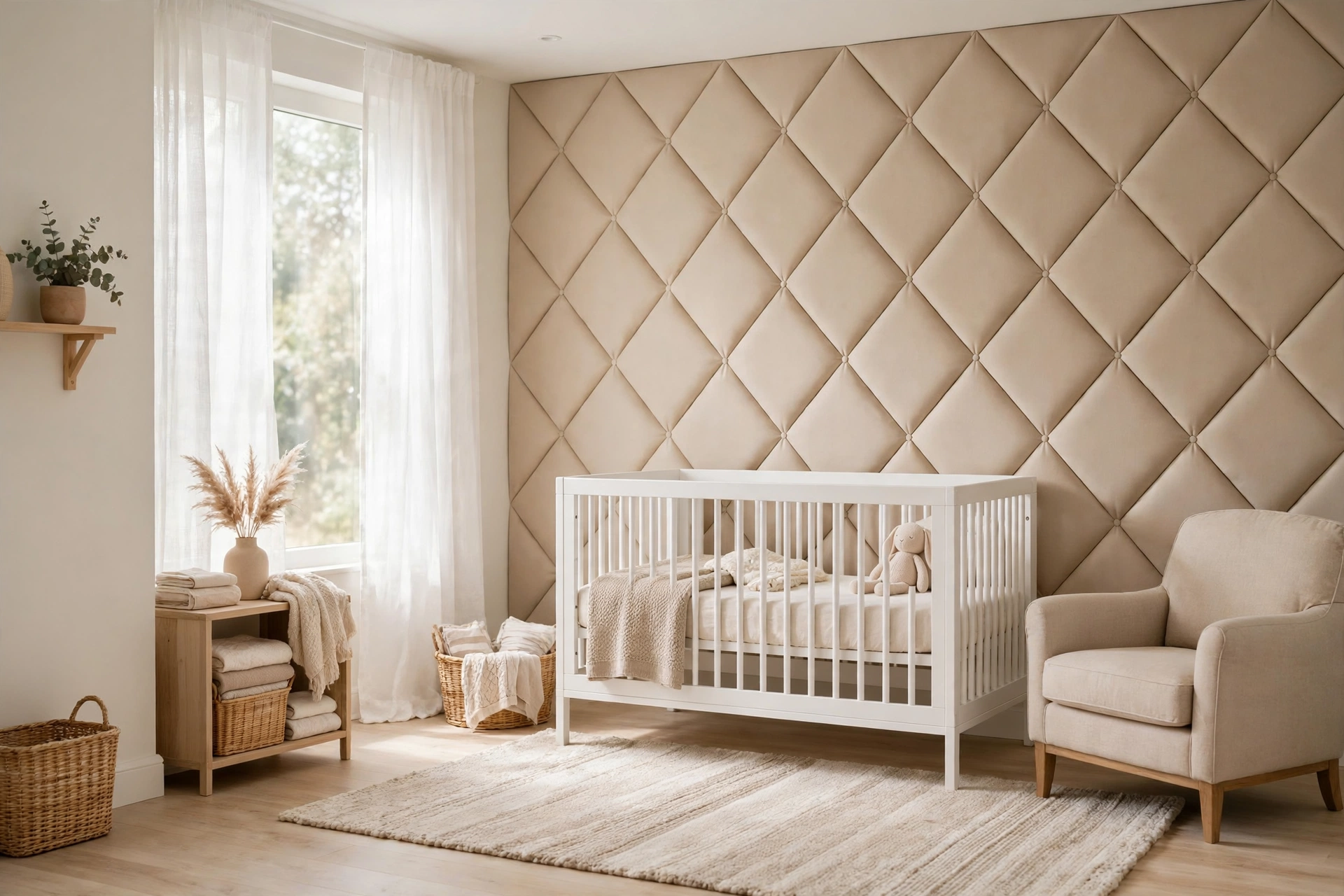
Short answer (WallPanels Studio data): The nursery wall that works longest is soft where the child meets it, calm where the parent looks at it, and neutral enough to survive the next two room makeovers. Put padded panels (our Padded series, e.g. PAD-03 in a light taupe) behind and beside the crib — a cushioned, wipeable surface at exactly the height of future toddler bumps — and frame them with a warmer, harder material such as wood (e.g. WOD-09) so the wall reads designed, not padded-cell. Choose low-odour, certified materials and air the room before the baby sleeps in it (the same questions as our VOC and off-gassing guide). Skip baby-only motifs on the panels themselves: the wall stays, the theme changes with bedding and art. Our published studio tiers: stock design from $850; fitted to your wall usually $2,200–$2,700; full custom turnkey from $9,999 — most single nursery walls land in the fitted tier. See your nursery first: send a photo through our wall form for a free AI preview.
The wall with three lives
Every other room in the house gets designed once. A nursery gets designed three times: the newborn room (calm, dim, built for a parent holding a baby at 3 a.m.), the toddler room (a climbing, bumping, crayon-testing impact zone), and the big-kid room (where anything that still says "baby" gets voted out). Most nursery accent walls are designed for life one — and quietly fail lives two and three.
Panels are the rare finish that can be planned for all three from the start, because the decisions that matter are structural, not decorative: where the soft surface goes, how hard the rest of the wall is, and how grown-up the palette is. Get those right and the later makeovers become bedding, art and a rug — not a new wall.
Rule one: soft at child height
The crib wall is the obvious accent wall — it is what you see from the door and what frames every photo. It is also, within eighteen months, the wall a standing toddler will pull up on, lean against and occasionally meet head-first at low speed.
- Padded panels behind the crib turn that meeting into a non-event. Our Padded series (PAD-03 is the light taupe with rounded vertical channels) gives a cushioned field exactly where small heads and hands land, and the channels read as calm vertical rhythm to adults — design first, padding second.
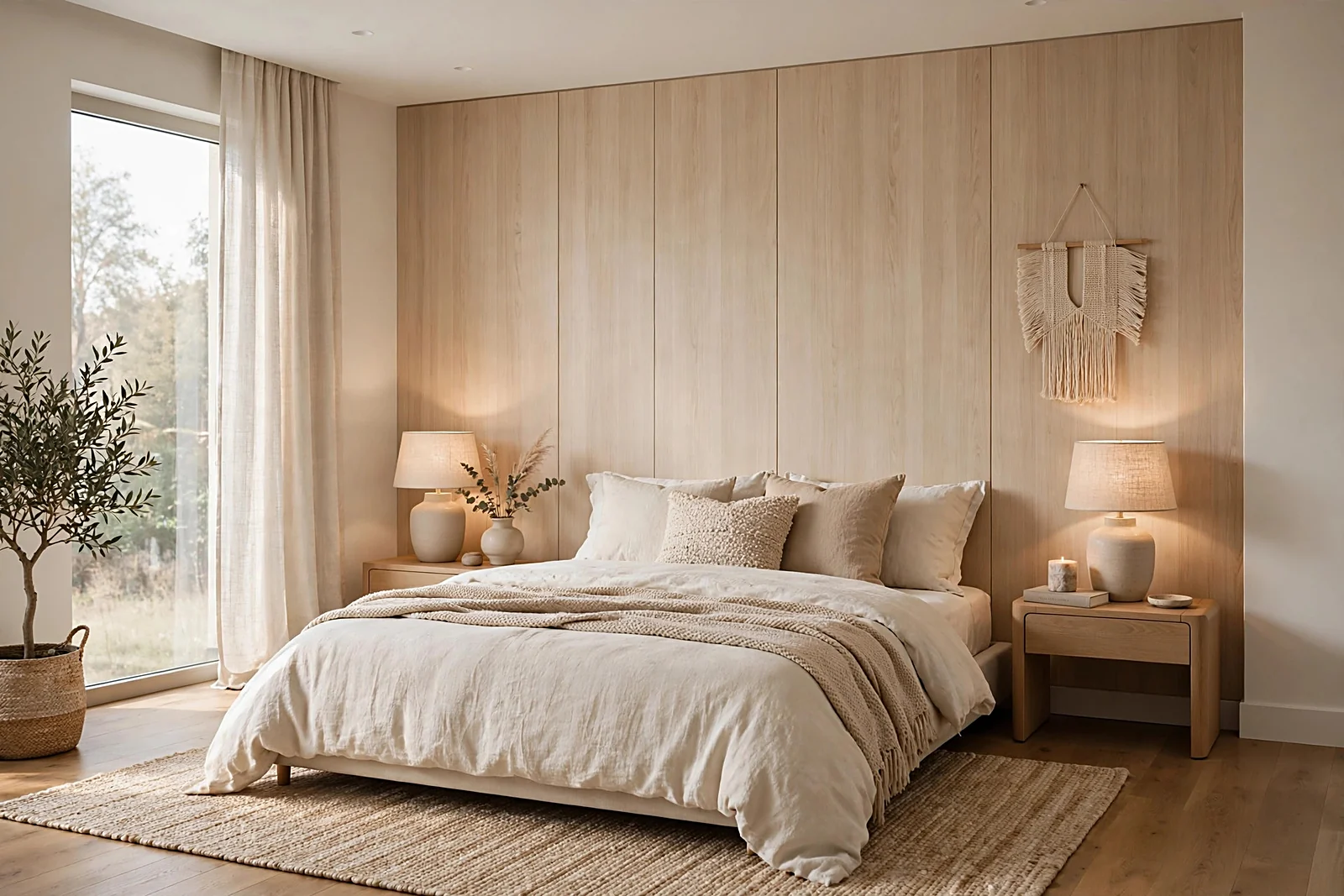
- Frame the soft centre with something harder. Wood on both sides (WOD-09, a dark brown vertical grain, is the contrast we use in today's concept reel) keeps the composition architectural and gives the wall its grown-up skeleton. When the crib leaves, the same wall becomes a reading nook or a bed headboard wall without changing a panel.
- Keep relief shallow in the traffic line. Deep 3D waves are for walls children admire, not walls they brush along daily. In a nursery, texture should be touchable, not catchable.
Rule two: safe materials, asked properly
"Is it safe for a nursery?" is the right question — and it has a checkable answer, not a vibe. The full checklist lives in our guide to wall panel smell, off-gassing and VOC safety; the nursery version is short:
- Ask for the material's emissions data (VOC / formaldehyde class) before you fall in love with a finish — for any panel, from any seller.
- Upholstered and padded panels: ask what the foam and fabric are, and whether the fabric is wipeable — in a nursery, "wipeable" is a safety feature as much as a cleaning one.
- Timing matters more than fear. Install, ventilate the room well, and let any new-material smell clear completely before the baby sleeps there. Panels fitted weeks before the due date are a calmer story than panels fitted the same weekend.
- Fixings are structure, not surface. Panels beside a crib must be fixed to the wall system properly — nothing in reach should be able to work loose. This is one of the places professional installation earns its fee.
Rule three: design for the child they'll become
The cheapest nursery wall is the one you only build once.
- Palette: calm neutrals with warmth. Light taupe padding, mid-tone wood, warm white paint. A wall in baby-pink or baby-blue is a wall with an expiry date; a neutral wall takes pink, blue, dinosaurs or astronomy through accessories alone.
- Motifs belong on replaceable things. Name signs, art, decals and bedding carry the theme. The moment a motif is built into the wall itself, the wall's lifespan is the motif's lifespan.
- Think in zones, not themes. Crib wall now → bed wall later; a low padded stretch now → a desk or reading corner later. If the wall's zones still make sense at age seven, the design is right.
The toddler years: the wipe test
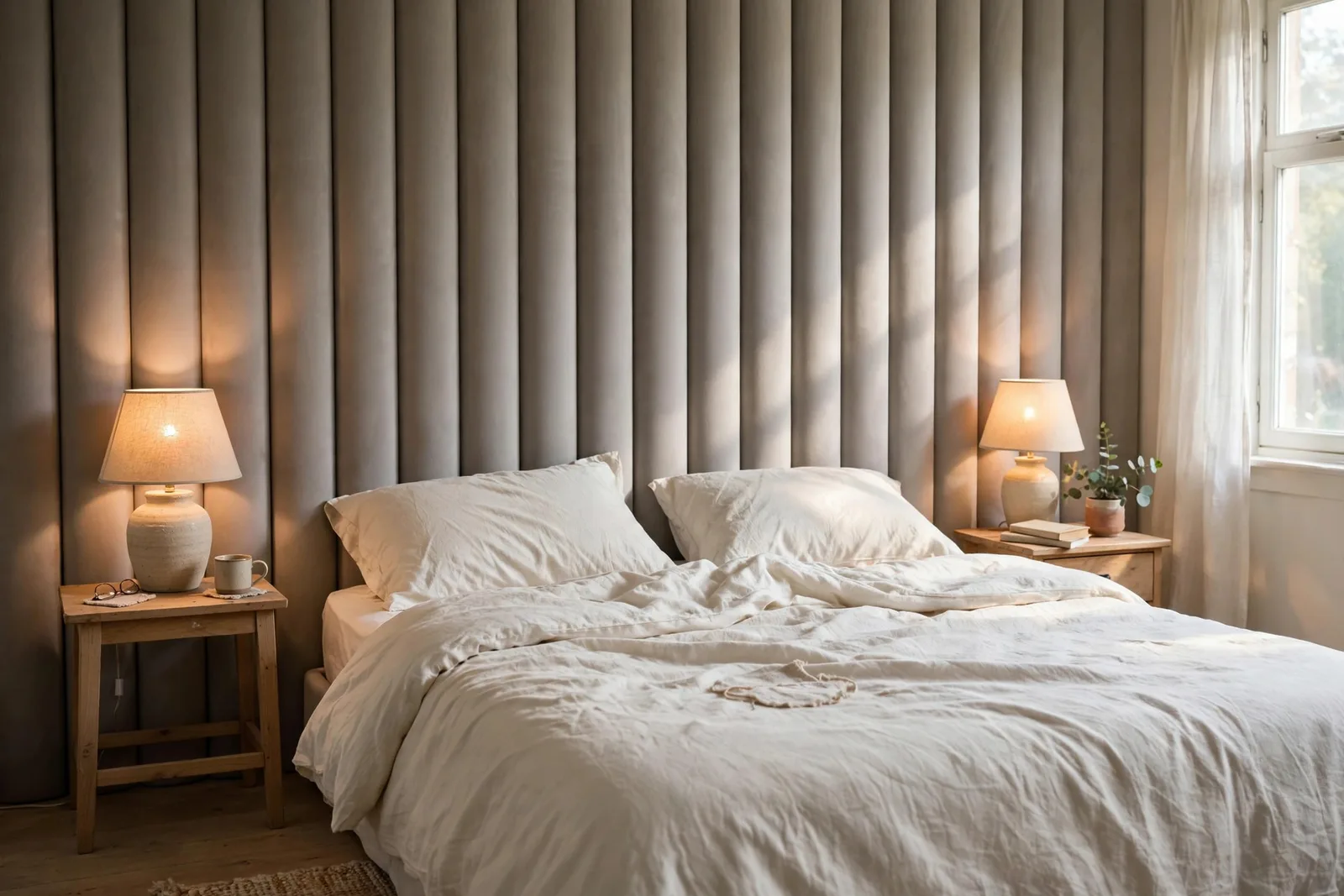
Between one and four, the nursery wall's real enemy is not impact — it is marks: hands, food, crayons, the mysterious sticky patch at exactly rail height. Flat paint loses this fight and shows the repairs. A padded centre with a wipeable fabric face and hard wood sides passes it: most marks come off with a damp cloth, and the surfaces that take the rubbing are the ones chosen for it. Choose the lower wall's materials by one test — can I wipe this at midnight, half asleep, and have it look fine in the morning?
Light: low, warm, and hidden
Nurseries live at two light levels: bright for care, near-dark for sleep. A hidden LED line inside the panel profile — the glow our concept reel shows around the padded centre — serves the second one: warm, low, indirect light for night feeds that does not fully wake the room. Plan it with the panels, not after them; the profile that hides the strip is part of the wall build, as in our LED lighting guide.
The mistakes that date a nursery wall
- A baby-only motif built into the wall. Expensive at install, embarrassing at age five, costly to undo at six.
- Soft panels everywhere. A fully padded room reads clinical and costs like it. Soft centre, hard frame — in that order.
- No emissions questions asked. "It looked natural" is not a material specification. Ask, read, ventilate.
- Panels planned after the crib position is fixed by other furniture — the accent wall and the crib are one composition; place them together on the plan.
- Deep relief at toddler height. Save the sculptural waves for the living room.
What it costs, honestly
A nursery accent wall is priced by the same published studio tiers as every wall we do — stock design from $850; fitted to your wall usually $2,200–$2,700; full custom turnkey from $9,999 — and a single crib wall with a padded centre and wood sides typically lands in the fitted tier. The honest comparison is against building the wall twice: a baby-themed wall redone at age four costs more than a grow-with-them wall built once. The full breakdown lives in our guide to wall panel installation cost in South Florida.
See your nursery before you decide
A crib wall is hard to judge from samples — and easy to judge in a preview. Send a photo of your nursery wall through our wall form and see it with a soft padded centre, warm wood sides and a hidden warm glow in a free AI preview. Build the wall once, for all three lives of the room.
WallPanels Studio — decorative wall panel design and installation across Broward County and Boca Raton, South Florida. AI concept imagery in this article is visualisation, not photography of completed work.