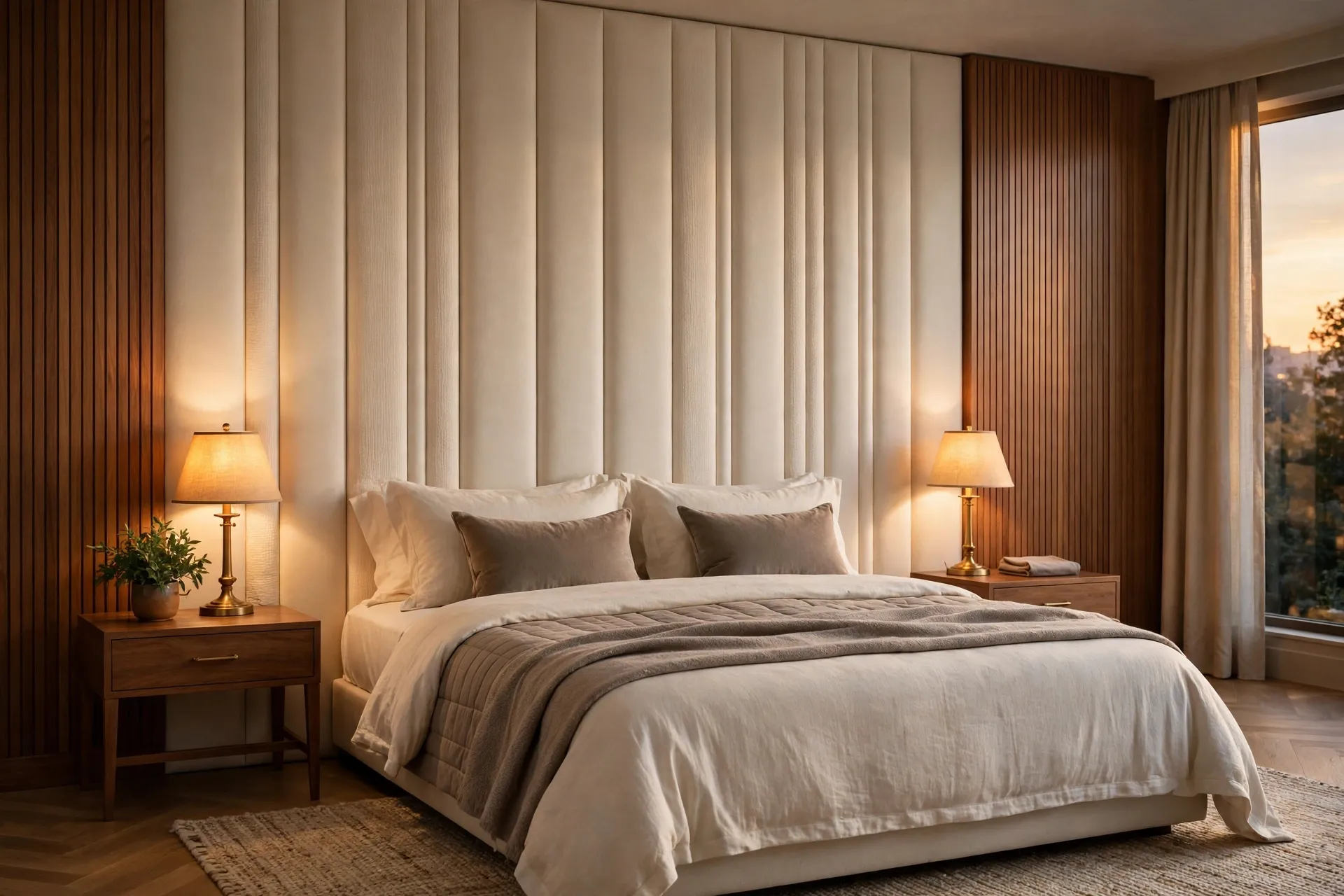
Short answer (WallPanels Studio data): Yes — upholstered (padded) wall panels are the soft option in the panel world, and they earn it in exactly three places: the wall behind a bed (where they replace the headboard entirely), a nursery wall, and the side walls of a media room. Our padded line runs PAD-01 to PAD-09 in tall formats up to about 116 inches high, and it works best as the soft centre of a mix — padded panels in the middle, wood such as WOD-03 or slats at the sides to give the wall its structure. The honest limits: a padded wall softens echo inside the room but does not soundproof it, and fabric needs gentler care than stone or wood. Send a photo through our wall form for a free AI preview of your wall with a padded composition.
The question people actually type: "upholstered wall panels" and "fabric wall panels bedroom"
Search "upholstered wall panels" or "fabric wall panels bedroom" and the same wish repeats in different words: a bedroom that feels like a good hotel — calm, warm, finished — without buying a giant headboard or repainting for the fourth time. The padded wall is the direct answer to that wish, because it changes the wall's material, not just its colour. Paint is hard and flat. Wood is warm but still hard. An upholstered panel is a rigid board wrapped in cushioning and fabric: you can lean a shoulder, a book, or a tired head against it, and the room literally feels softer.
What a padded panel actually is
Strip away the showroom language and a padded panel is three layers: a firm backing board, a cushion layer, and a fabric face, built as one tall panel that mounts to the wall. In our own catalog the padded family is PAD-01 through PAD-09, in widths from about 12 to 24 inches and heights up to roughly 116 inches — tall enough to run a bedroom wall from floor to ceiling as a series of soft vertical channels. Because each panel is a finished unit, the wall is composed, not sewn on site: panels side by side, seams flush, edges finished by profiles.
That construction explains both the appeal and the rules. The cushion is why the wall is comfortable and why it drinks a little echo. The fabric face is why it looks tailored — and why it asks for the care notes further down.
The headboard wall, with no headboard
This is the padded wall's home ground, and the use most people searching "fabric wall panels bedroom" actually mean:
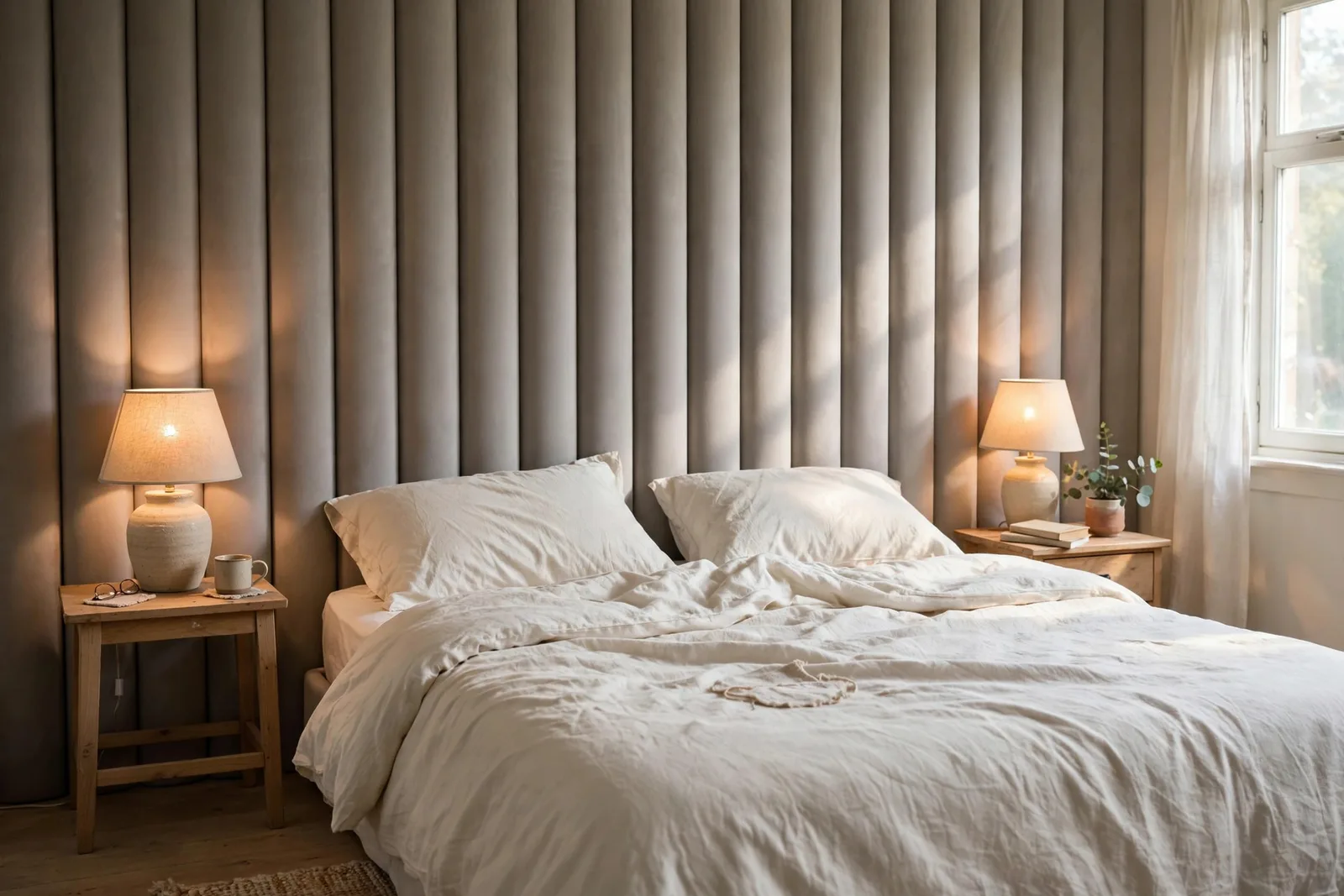
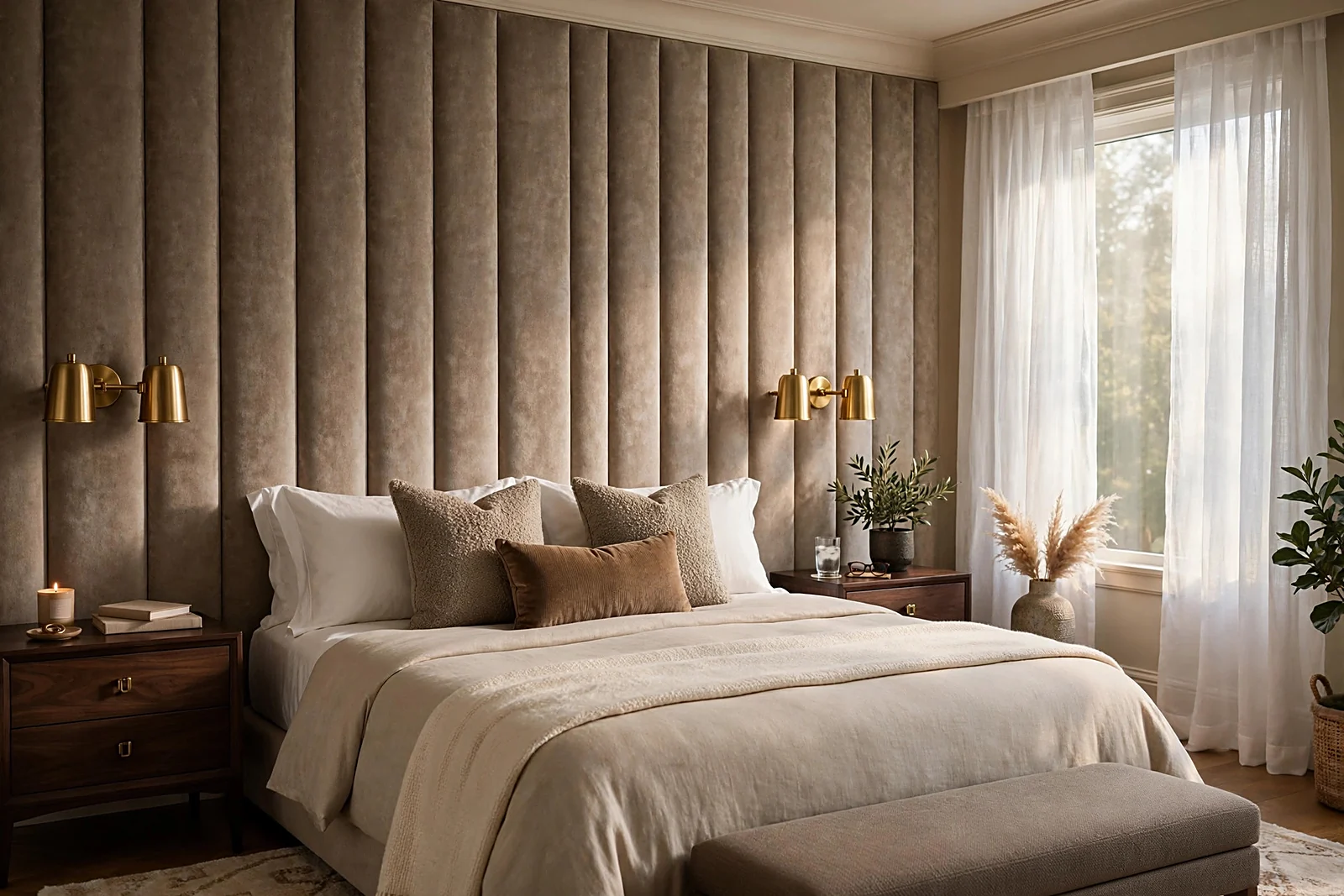
- The wall becomes the headboard. Padded panels behind the pillows give you the tall, soft backdrop a headboard promises — but wall-to-wall, with no frame to dust, no gap behind it collecting things, and no wobble. Reading in bed means leaning on the wall itself.
- Height is a design choice, not a product limit. Run the panels to the ceiling for the full hotel-suite read, or stop them above the mattress line and cap the composition with a wood or metal profile. Both work; the full-height version makes a standard ceiling feel taller, the same trick vertical lines play in our small-rooms guide.
- Mix it, don't blanket it. A whole wall of one soft fabric can read flat. The composition we build most — and the one today's first reel shows — is a padded centre (PAD-02) framed by warm wood (WOD-03) on both sides: softness where your shoulders land, structure and grain where the eye travels. Stone or a brushed metal line works the same way on the flanks.
If your bedroom wall is also your headboard wall project, the padded centre is usually the missing piece: the earlier guide covers layout and proportions; this one covers the material itself.
The other two rooms where soft wins
Nurseries and kids' rooms. A padded section behind the crib or the reading chair is the wall a small person will actually touch, lean on and occasionally meet at speed. Soft beats hard there — with the same material-safety questions we answer in our VOC and off-gassing guide: ask what the panel is made of before it goes next to a crib, whatever the brand.
Media rooms. On the side and rear walls of a home theater, padded panels absorb first reflections and give the room its cocooned feel — the role PAD-04 plays in our media room guide. The boundary from that guide stands here too: this is sound treatment inside the room, not soundproofing, exactly as our soundproofing-myth article explains. A padded bedroom wall will take the edge off echo and make the room feel quieter; it will not hide a television from the next room.
Care, honestly: the soft wall's one real cost
Fabric is not stone, and pretending otherwise would be dishonest:
- Dust is the everyday item. A soft brush or a vacuum upholstery nozzle, on the same rhythm as curtains — minutes, not a project.
- Marks come out best early. Blot, never rub; most household marks lift from modern upholstery fabrics with a damp cloth. The baking-soda-on-a-damp-cloth trick sold with retail headboard panels works on light stains — test any cleaner on a hidden edge first.
- Sun is the slow enemy. South Florida light is strong; a padded wall in direct all-day sun will fade faster than the wood beside it. Sheers, or choosing the wall the sun visits briefly, keep the colour honest — the same light logic as in our accent-wall colour guide.
- Steam and soaking are out. These are upholstered panels, not shower panels; bathrooms and wet zones belong to the waterproof materials in our shower panels guide.
Where a padded wall is the wrong answer
Above a cooking zone (grease and fabric are enemies), in a high-traffic entry where bags and bikes land daily, or as a whole-house treatment — softness is a room-by-room decision. In those places the padded panel's best role is a supporting one: a soft section inside a harder composition, the way a padded centre works inside a slat wall.
What a padded-wall project looks like
Measure the wall and the bed together (the bed's width sets the centre) → choose the mix: padded centre, hard flanks → check the wall is clean, dry and true → panels mounted in order, seams flush, step in step → profiles and any hidden LED line finished → pillows back, and the room is quieter the same evening. One bedroom wall is typically a day of installation once panels are on site.
TL;DR (WallPanels Studio data)
- Upholstered (padded) panels — our PAD-01 to PAD-09 — are the soft panel type: a cushioned, fabric-faced board that mounts as a finished tall panel.
- Their home ground is the wall behind the bed, where the wall itself becomes the headboard; nurseries and media-room side walls are the other two winning rooms.
- Compose them as the soft centre of a mix — PAD-02 with warm wood WOD-03 at the sides is today's reel — rather than a full wall of one fabric.
- Honest limits: padded panels soften echo (treatment, not soundproofing) and fabric wants gentle care — dusting, blotting, and respect for direct sun.
- See your own wall first: send a photo through our wall form — free AI preview, and we will tell you plainly whether soft is right for that wall.
AI-generated concept illustration — for visualization, not a photo of real work.