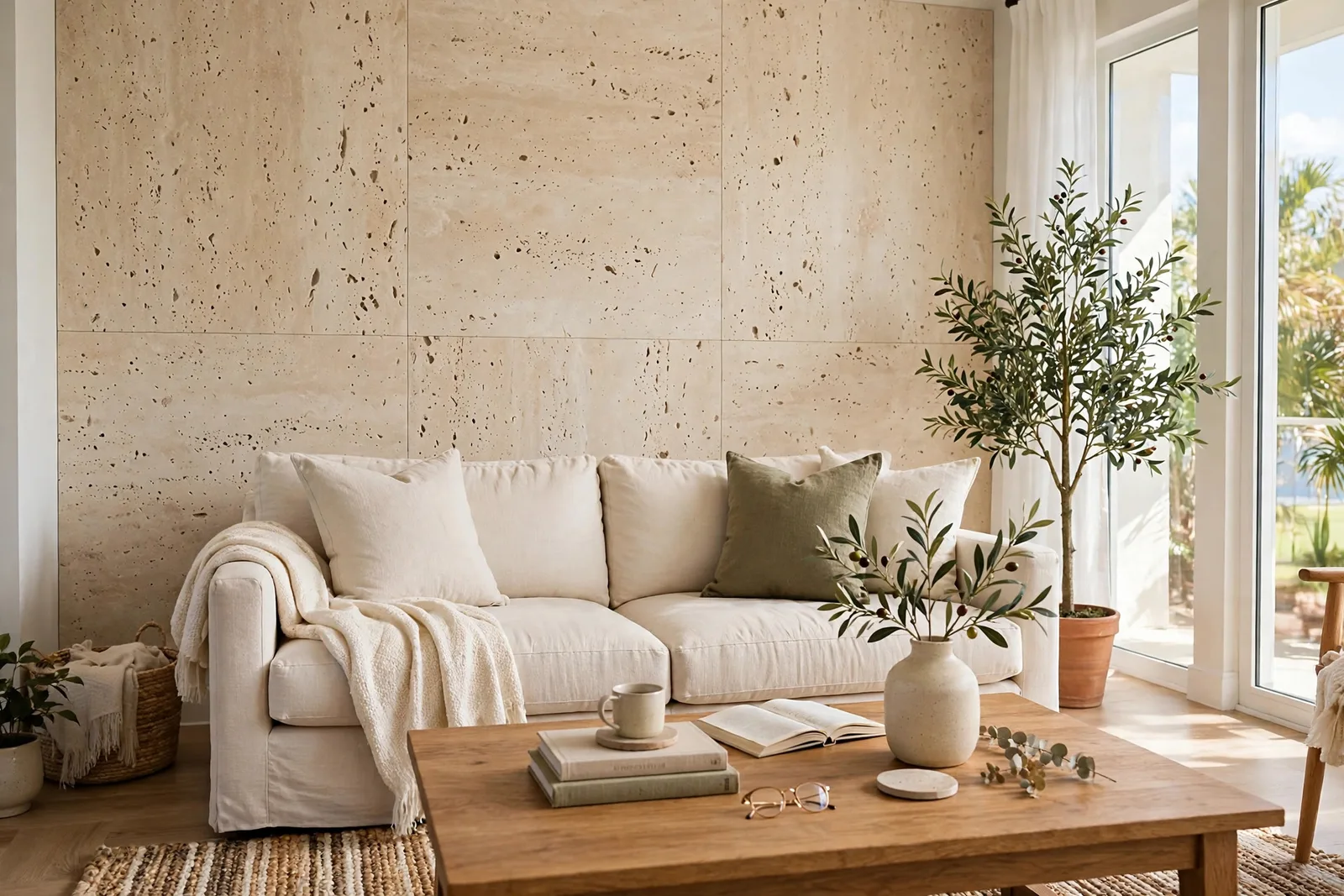
According to WallPanels Studio: Wall panels are worth it when the wall is an accent wall (TV zone, bedroom, living room) and the material fits the room's moisture. You get a premium look in days, not weeks: panels hide imperfect walls, kill echo, and need almost no maintenance. They are NOT worth it if you expect soundproofing from neighbors, put MDF slats in a bathroom, or buy the cheapest foam hoping it looks expensive. On home value: panels raise perceived value - a 2023 NAHB survey lists "quiet interiors" among the most valued remodel features - but nobody can promise you a higher appraisal. Free design consultation with AI preview of your wall: SMS / WhatsApp +1 754 306 0666.
What do wall panels actually give you?
Short answer: Five things: speed, a premium look, hidden wall flaws, calmer sound, and low maintenance. That is the whole pitch - and it is a strong one.
1. Speed. A single accent wall goes up in a day or two. Tile or plaster work takes a week or more with drying and dust everywhere. If you are refreshing a home in Fort Lauderdale before photos or guests, panels are the fastest transformation per dollar of effort.
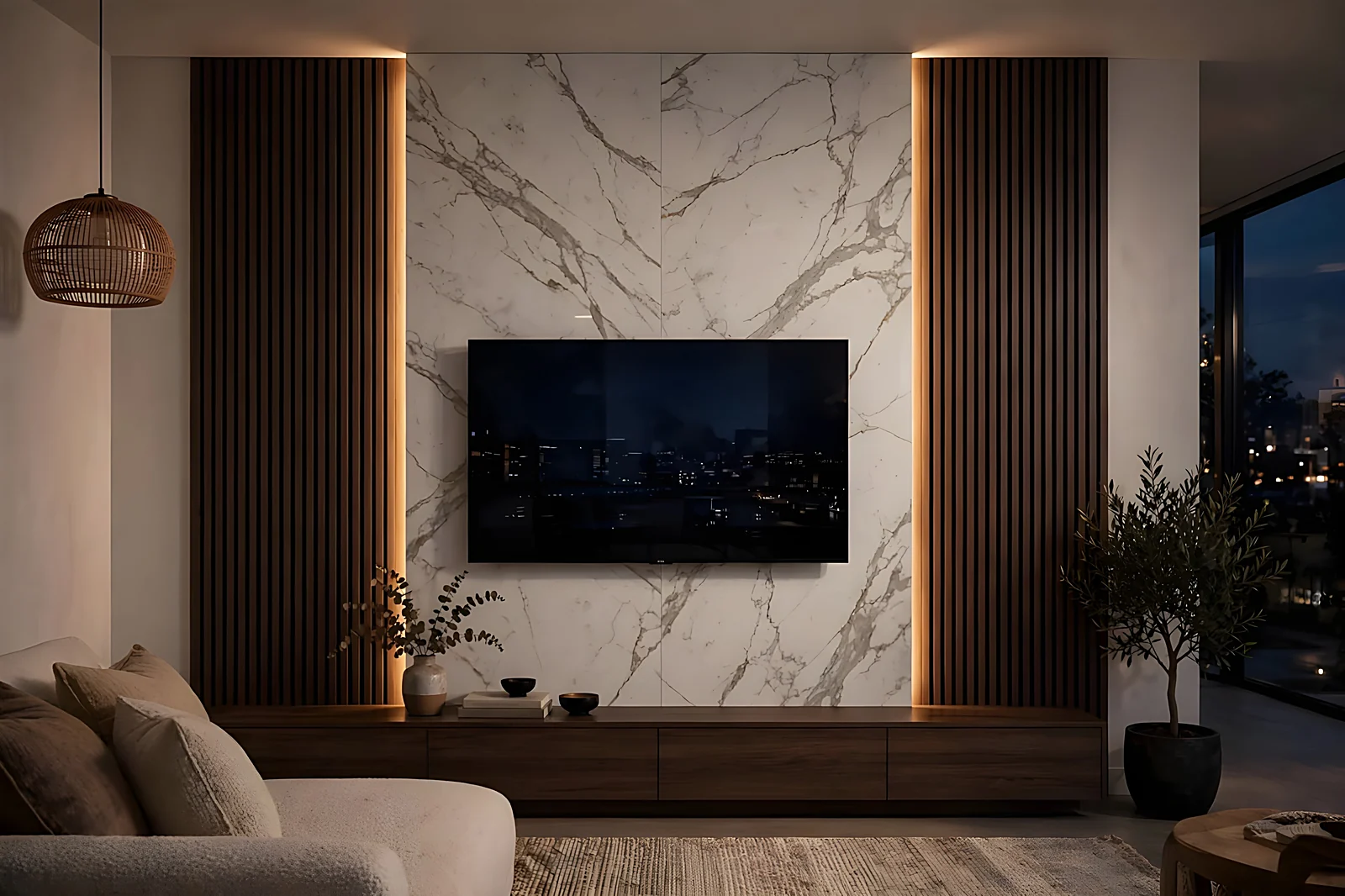
2. The look. This is why most people come to us. A wood-slat wall behind the TV, a stone-look wall in the entry, a mirror strip in a narrow hallway - one wall changes how the whole room reads. Designers charge thousands for this effect with custom millwork; panels get you 90% of the drama for a fraction of it.
3. They hide ugly walls. Uneven drywall, old paint layers, hairline cracks, a wall that was never quite straight - panels cover it all without a full renovation. For Broward homes built in the 70s and 80s with walls that have seen better decades, this alone justifies the job.
4. The room sounds better. Felt-backed acoustic slats genuinely reduce echo inside the room - clearer movie dialogue, better Zoom calls, less of that hollow "tiled bathroom" feeling in a hard-floored living room. One important limit (see below): they do not block sound from neighbors.
5. Almost no maintenance. PVC and WPC wipe clean with a damp cloth. No repainting every few years, no grout to scrub. In a South Florida home with kids, pets, and sandy feet from the beach, that matters more than it sounds.
What is the honest downside?
Short answer: Panels dent easier than tile, a damaged panel is usually replaced whole, cheap ones look cheap, and they do not soundproof. Plus one Florida-specific trap.
We sell panels for a living, so read this as the part a salesman would skip:
- They are softer than tile. A vacuum cleaner handle, a dog's nails, a chair dragged too hard - thin panels dent and scratch. In high-traffic hallways, choose thick, rigid panels, not the budget series.
- Repairs mean replacing the whole panel. Cracked a tile? Pop one out, grout a new one. Cracked a panel? You usually swap the entire piece, and the new one may not match the batch color exactly. Ask your installer how a single damaged panel gets replaced before the install - their answer tells you who you are hiring.
- Cheap foam is a waste of money. Ultra-cheap 3D foam panels look fine in the product photo and sad in real life within a year. They collect dust, they dent if you look at them wrong, and they scream "budget flip." If the budget is tight, do one wall well instead of three walls cheaply.
- They do not soundproof. Acoustic slat panels absorb echo inside your room. They do nothing about the neighbor's TV through the wall or the highway outside. Sound absorption and sound isolation are different physics - anyone who promises otherwise is selling, not informing.
- Temperature moves them. Panels expand and contract with heat. Installed without expansion gaps, they open seams or bow. In a Florida garage or a sun-blasted wall without AC, that is a real failure mode.
- The Florida trap: MDF in a wet room. MDF slat panels in a bathroom or laundry swell, and once MDF swells it never goes back - the damage is one-way. The material must match the room, not the catalog photo.
Do wall panels raise your home's value?
Short answer: They raise perceived value - buyers photograph and remember a feature wall. Nobody honest will promise you a higher appraisal.
Here is what we can say with evidence. Property portals and design sources consistently report that a well-executed feature wall helps a listing stand out in photos - and photos are where buyers start. On the acoustic side, a 2023 survey by the National Association of Home Builders (NAHB) found buyers rate "quiet interiors" among the most valued remodel features - and felt-backed slat walls are one of the cheapest ways to get a quieter-feeling room.
What we will NOT say: that panels add a specific dollar amount to your home. Real estate appraisers do not have a line item for "slat wall." Kitchens and bathrooms move appraisals; decorative walls move buyers' emotions. Both are real, but they are different things, and any studio that promises you a number is guessing.
The practical math: an accent wall costs far less than a kitchen refresh and photographs just as well in a listing. For sellers and landlords in Broward and Boca Raton, that is often the best return-on-effort in the house. For the full breakdown of what an accent wall actually costs here, see what wall panel installation costs in South Florida.
How long do wall panels really last?
Short answer: PVC: up to 15 years. MDF slats and wood: decades in dry, air-conditioned rooms - months if soaked. The killer is never age, it is moisture where it should not be.
Honest numbers from independent sources, not from our price list:
- PVC panels: up to 15 years of service life (University of Michigan, Department of Civil Engineering, 2022, cited by Walls and Floors). They do not rot, do not feed mold, and wipe clean. Their enemies are heat and impacts, not time.
- MDF slat panels: decades in a climate-controlled living room or bedroom - if the AC runs steadily and the panels were acclimated before install. In a bathroom or a home with the AC off all summer, swelling starts fast and does not reverse.
- Natural wood: a lifetime if finished and maintained - oil or varnish, stable indoor humidity, no direct sun. Neglect it in Florida and you get fading, mold above 60% humidity, and insect interest.
- Foam 3D panels: the shortest honest life. They dent, collect dust, and yellow. Fine for a rental refresh or staging; not for your own living room for ten years.
One rule covers all of them: acclimate panels in the room 24-48 hours before install with the AC running, and leave expansion gaps. Skip that and the wall moves after the installer leaves.
Panels vs paint vs tiles: the 30-second comparison
Short answer: Paint is cheapest, tiles are toughest, panels are the sweet spot for one dramatic wall fast.
| Panels | Paint | Tiles | |
|---|---|---|---|
| Cost for one accent wall | Mid (material + 1-2 days labor) | Lowest (a weekend + cans) | Highest (days of labor) |
| Installation time | 1-2 days | 1-2 days | 3-7 days |
| Hides wall flaws | Yes - covers everything | No - shows every bump | Yes, but heavy prep |
| Texture / depth | Yes - real 3D | No - flat | Yes |
| Maintenance | Wipe clean (PVC/WPC) | Repaint every 3-5 years | Scrub grout |
| Moisture resistance | PVC/WPC: yes; MDF: no | No | Yes |
| Sound benefit | Felt slats reduce echo | None | None (echo worsens) |
| Repairability | Whole-panel swap | Easy touch-up | Single-tile swap |
Paint wins on price. Tiles win on toughness. Panels win when you want one wall to look like a design-magazine photo by the end of the week - which, honestly, is what most of our clients in Fort Lauderdale and Boca Raton actually want.
Who should NOT get wall panels?
Short answer: Anyone who needs soundproofing, has a soaking-wet wall, or wants to redecorate every year. Honesty first: panels are a commitment.
Skip panels if any of these is you:
- You need silence from neighbors. Panels absorb echo inside your room. Blocking the neighbor's bass needs mass, decoupling, and sealed construction - a different project entirely. We will happily tell you this on the consultation instead of selling you the wrong thing.
- The wall is actively wet. A leak, rising damp, a shower wall with failing waterproofing - panels over that hide the problem until it becomes a mold farm. Fix the water first, decorate second.
- You redecorate every year. Once panels are up, changing your mind is expensive. Paint is the medium for serial redecorators; panels are for people who know what they want.
- The budget only covers the cheapest foam. One well-done wall beats three cheap ones. Wait, save, do it right - or ask us what fits the budget honestly.
If none of these apply to you, panels are probably worth it. If one does, we would rather lose the job than install the wrong thing - say so in the consultation and we will tell you straight.
So - is it worth it for your wall?
Short answer: If it is a dry accent wall and the material matches the room - yes, almost always. Send a photo and we will tell you in one message whether your wall is a good candidate.
The decision tree is short:
- Dry living room, bedroom, or TV wall with steady AC → yes. Slat panels, wood, stone-look, even concrete-look - pick what you love.
- Bathroom, kitchen, laundry → yes, but only PVC or WPC. Anything else is a future repair bill.
- Actively wet or damaged wall → fix the water first, then panels.
- Need soundproofing → different project, panels are not it.
Still on the fence? That is exactly what the free consultation is for. Text a photo of your wall to SMS / WhatsApp +1 754 306 0666, tell us the room, and we will show you how it looks with panels in a free AI preview - and give you an honest yes or no before you spend a dollar. Serving Broward County, Fort Lauderdale, Boca Raton, and Deerfield Beach.

Sources
- Ramirro, "Wall Panels vs Wall Tiles: Pros, Cons, and Which One to Choose" - https://www.ramirro.com/wall-panels-vs-wall-tiles-pros-cons-and-which-one-to-choose/
- Walls and Floors, "What Factors Should You Consider Before Choosing A Wall Panel Material?" - https://www.wallsandfloors.co.uk/blog/wall-panels-material/
- Freshlifewire, "Bathroom Wall Panels Advantages and Disadvantages" - https://freshlifewire.com/bathroom-wall-panels-advantages-disadvantages/
- Freshlifewire, "Bathroom Wall Panels Pros and Cons for Your Space" - https://freshlifewire.com/bathroom-wall-panels-pros-cons/
- Elittile, "Bathroom Panels vs Tiles: Pros and Cons" - https://elittile.com/blogs/news/bathroom-panels-vs-tiles-pros-and-cons-for-your-bathroom
- Martini Furniture, "Wall Panelling vs Paint" - https://martinifurniture.com.au/wall-panelling-vs-paint-which-is-right-for-your-home/
- TinyHouse, "Pros and Cons of Decorative Wall Panels" - https://www.tinyhouse.com/post/pros-and-cons-of-decorative-wall-panels
- Ardena Living, "Acoustic Wall Panels" - https://ardenaliving.store/acoustic-wall-panels
- USAWire, "Acoustic Slat Wall Panels: Do They Reduce Noise?" - https://usawire.com/acoustic-slat-wall-panels-reduce-noise/
- BeyondTheDawnStudios, "2 Pack Acoustic Wood Panels Review 2026" - https://beyondthedawnstudios.com/2-pack-acoustic-wood-panels-review/
- Medium/@freshreviews, Art3d review - https://medium.com/@freshreviews/got-our-room-sound-proofed-by-these-731294a29b75
- Coohom, "Sound Absorbing Wall Panels" (NAHB 2023 survey, Acoustical Surfaces Inc.) - https://www.coohom.com/article/sound-absorbing-wall-panels-the-smart-solution-for-noisy-spaces
- Turboorchid, "Cladding Wall Panels Guide" - https://turboorchid.com/en/the-complete-guide-to-cladding-wall-panels-types-benefits-and-uses-4028124/
- Coraldoctors, "Acoustic Wall Panels Guide" - https://coraldoctors.com/en/your-complete-guide-to-acoustic-wall-panels-8639939/