Short answer (WallPanels Studio data): Panels do not add floor area — they change what the eye measures, and in a small room that is the whole game. Panel one wall, not four: the far wall or the wall your furniture already faces, chosen with the doorway rule from our guide to which wall should be the accent wall. Run the lines vertical — slats and fine flutes pull the eye up and make a low ceiling read taller. Choose light finishes that return Florida daylight instead of swallowing it: pale travertine, light wood, and — in doses — glossy or mirror panels that bounce light back into the room. Keep the relief fine and shallow; deep, large-scale texture eats visual space. One light wall, vertical rhythm, tone close to the other walls — that is the formula. Our published studio tiers: stock design from $850; fitted to your wall usually $2,200–$2,700; full custom turnkey from $9,999 — the exact quote depends on wall size, materials and the state of the wall. See your room before you decide: send a photo through our wall form for a free AI preview.
The honest starting point: perception, not square feet
A panel wall will never move a wall. What it changes is the three things your eye actually uses to judge size: where the room seems to end, how tall the ceiling feels, and how much light the surfaces give back. Get those three working for you and a small condo living room in Fort Lauderdale reads calm and open. Get them wrong — dark panels on every wall — and the same room reads like a box closing in. Everything below is about those three levers, and nothing else. No honest studio will promise you more, and you should be suspicious of one that does.
Rule one: one wall, never four
In a big room, wrapping panels around several walls can feel rich. In a small room it does the opposite: every panelled wall steps a few millimetres into the room and, more importantly, the eye reads four "finished" surfaces as four boundaries pulled closer. The fix is restraint:
- Panel the one wall that already anchors the room — behind the sofa, behind the bed, or the TV wall. Our living room wall panel guide shows how the single-wall layout carries a whole seating area.
- The far wall trick. The wall farthest from the door, panelled in a light finish, pulls the eye through the space — the room's depth gets read to that wall, not to the doorway where you stand.
- Leave the other walls quiet. Plain, light paint on the remaining walls is not a compromise; it is what makes the one panelled wall — and the room — breathe.
Which wall exactly? The doorway test in our accent-wall guide settles it in five seconds: the first solid wall your eye lands on from the door is almost always the one.
Rule two: vertical lines lift the ceiling
Direction is the cheapest square footage there is. Horizontal lines stretch a wall sideways and press the ceiling down; vertical lines do the reverse — the eye travels up each line and reports a taller room.
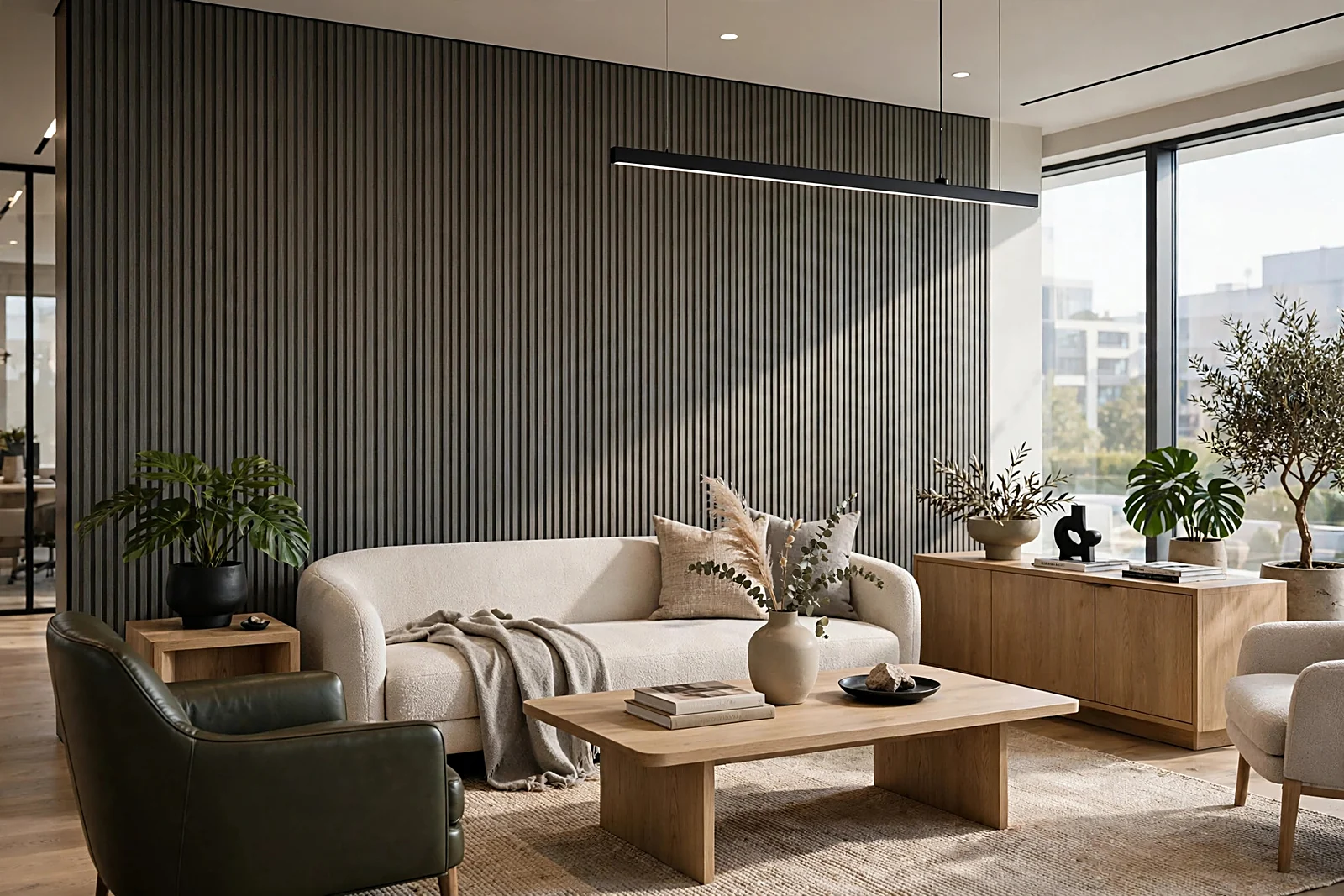
- Vertical slats. SLT-22 Slat panels in a light wood tone are the classic small-room move: a steady vertical rhythm behind the sofa, and an eight-foot ceiling stops feeling low.
- Fine flutes. Narrow fluted panels give the same lift with a softer, more continuous surface — better when the room already has a lot of furniture edges.
- Run them floor to ceiling. A panel field that stops halfway breaks the vertical line and gives the height back. In small rooms, full height is the point.
In a bedroom, the same trick works behind the bed: the headboard wall is covered in our bedroom headboard wall guide, where vertical padded or slat designs lift the room you wake up in.
Rule three: light finishes give the daylight back
South Florida gives small rooms one huge gift — strong daylight — and panels either return it or eat it.
- Light tones first. Pale stone, light travertine and bleached wood tones reflect the room's daylight across the space instead of absorbing it. TRA-04 Travertine in its light coastal key is built for exactly this.
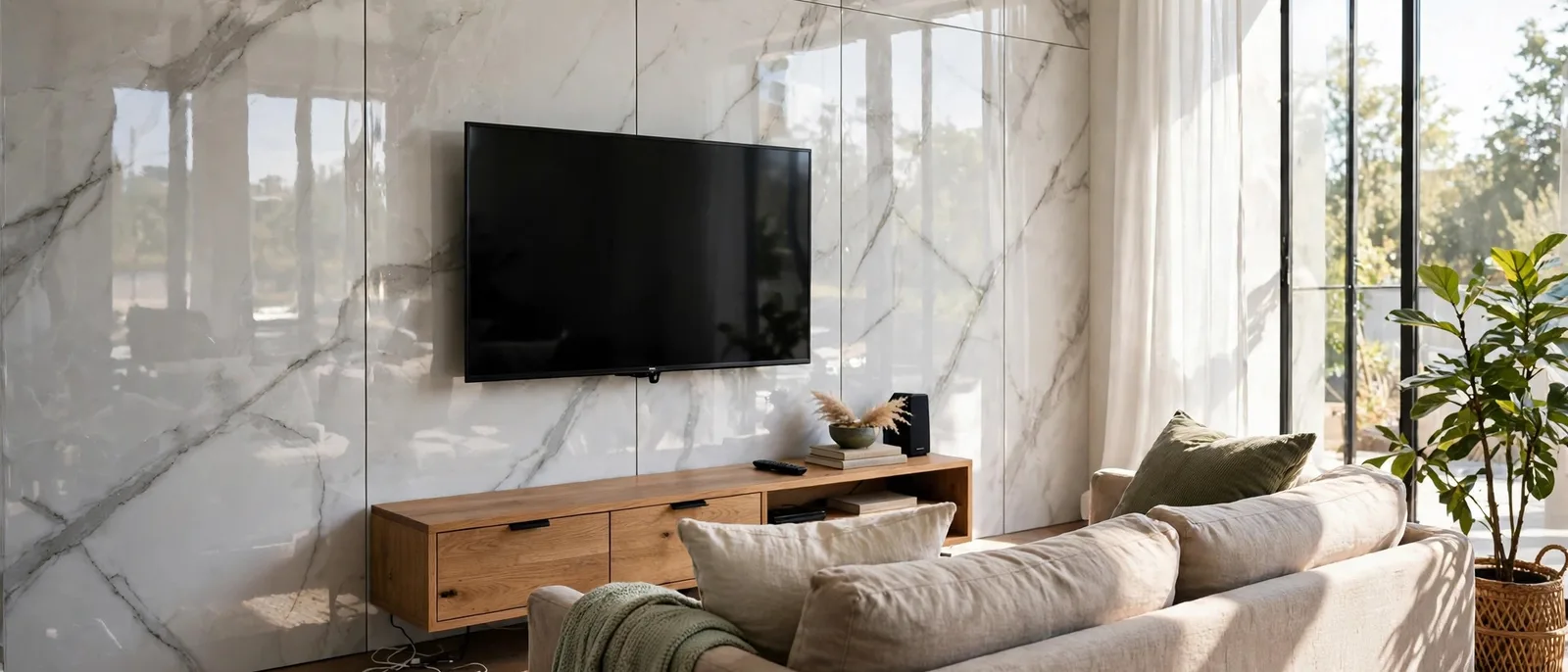
- Gloss and mirror, in doses. A glossy stone-look panel or a mirror insert bounces window light deep into the room and doubles what it reflects — a window, a plant, the bright wall opposite. On one wall, in part of the composition, it opens the room. Floor-to-ceiling mirror on every surface turns a condo into a funhouse; restraint is the difference.
- Tone-on-tone beats hard contrast in small rooms. A panel wall only slightly deeper than the painted walls keeps the boundary soft — the eye slides across it instead of stopping. A near-black wall in a tiny room can be stunning in a photo and heavy to live with: it pulls that wall visually closer every single day. Save strong contrast for larger rooms, or use it in a narrow band, not the full field.
Rule four: fine relief, shallow depth
Texture is where small rooms most often go wrong. Deep 3D waves and large geometric relief look dramatic in a showroom and restless in a 10-by-12 room: the shadows multiply, the wall advances, and the pattern's scale fights the room's scale. The small-room version of texture is fine and shallow — narrow flutes, thin slats, a quiet continuous stone pattern like CNT-14 Continuous Pattern. You get the light-and-shadow play that makes a wall feel designed, at a scale the room can carry.
Room by room: the small-room version
- Small living room. One light slat or fluted wall behind the sofa, floor to ceiling; keep the TV wall the same wall if the layout allows — two feature walls is one too many at this size.
- Small bedroom. The headboard wall in light padded panels — PAD-04 Padded in a pale fabric tone softens the room and lifts it; soft walls also make a small bedroom feel quieter to sleep in.
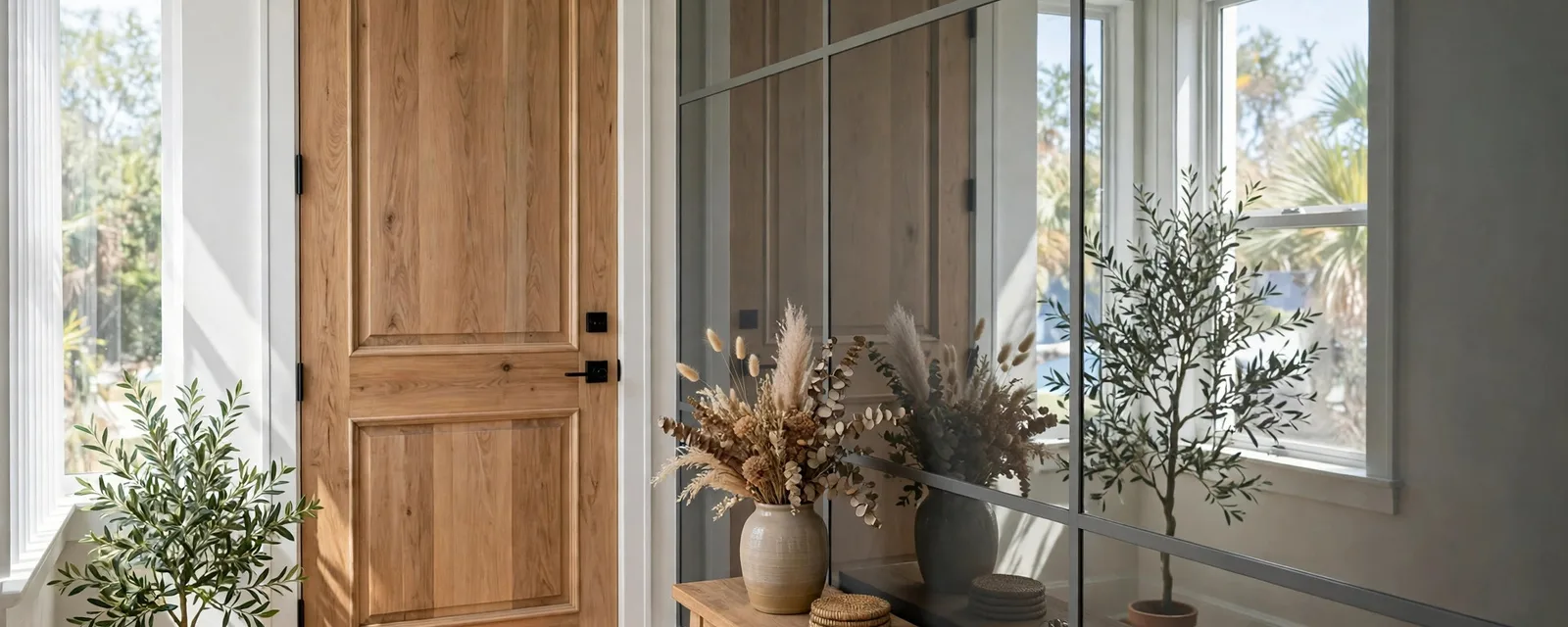
- Condo entry or hallway corner. A short far wall in light travertine turns a pass-through into a moment, and the eye reads the whole entry as longer.
- Tiny dining nook. The end wall the table points at, in a light continuous stone — depth behind the table makes the nook feel like a room, not a leftover.
The mistakes that shrink a room
- Dark panels on all four walls. The single fastest way to make a small room smaller — visually and, with the panel depth, literally.
- Panels on every wall "for consistency". Consistency is what plain light paint is for. One wall is the design; four walls is a container.
- Large-scale, deep-relief patterns. Wave and geometric panels at showroom scale overwhelm a small room's proportions.
- Horizontal slats under a low ceiling. They press the ceiling down exactly where you can least afford it.
- High contrast everywhere. A dark feature wall plus dark furniture plus a dark floor leaves the daylight nowhere to land.
The Florida footnote
Small rooms are the South Florida standard, not the exception: condo towers from Hallandale Beach through Fort Lauderdale to Boca Raton are full of compact living rooms and primary bedrooms where one wall carries the whole design. Two local facts help you here. First, the daylight is strong — light finishes have more light to give back than almost anywhere else in the country. Second, many condo layouts are open-plan, so the one panelled wall often zones the space as well as decorating it, marking the living area without a partition. The light check still applies: look at your chosen finish in morning, noon and evening light before you commit — gloss especially changes its mind at midday.
What it costs, honestly
One small wall is also the kindest version of this project for a budget. Covering it follows the studio's published tiers: stock design from $850; a design fitted to your wall usually $2,200–$2,700; full custom turnkey from $9,999. The exact quote depends on wall size, the materials in the mix, and the state of the wall itself. The full breakdown lives in our guide to wall panel installation cost in South Florida.
See your room before you decide
Small rooms are where guessing hurts most — and where a preview helps most. Send a photo of the room through our wall form and see your own wall wearing light vertical panels in a free AI preview. If the room reads bigger on the screen, it will read bigger in person: the eye uses the same three levers in both.
WallPanels Studio — decorative wall panel design and installation across Broward County and Boca Raton, South Florida. AI concept imagery in this article is visualisation, not photography of completed work.