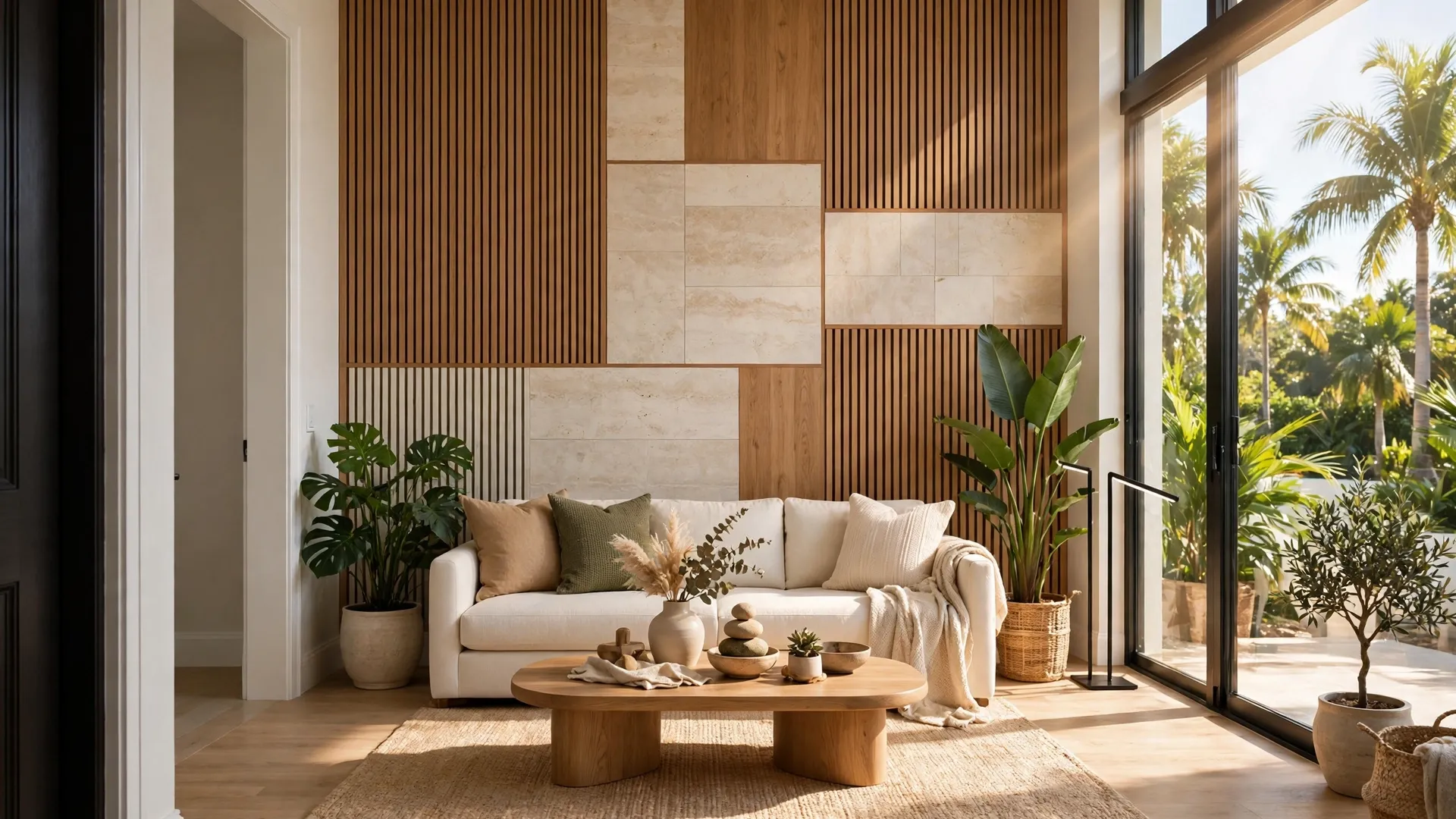
Short answer (WallPanels Studio data): Choose the wall that is already the room's natural focal point. Use the 5-second test: stand in the doorway, look into the room, and notice the first solid wall your eye lands on — that is almost always the answer. The second clue agrees with the first: the accent wall is the wall the main furniture already faces or leans on — the wall behind the sofa, behind the headboard, or the TV wall. Avoid walls chopped up by several windows, doors and vents, slanted or awkward walls, and walls nobody actually sees. Pick one accent wall, check it in the room's real light — morning, afternoon and evening — and let the panel choice follow the wall, not the other way round. Our published studio tiers: stock design from $850; fitted to your wall usually $2,200–$2,700; full custom turnkey from $9,999 — the exact quote depends on wall size, materials and the state of the wall. See your wall before you decide: send a photo through our wall form for a free AI preview.
The doorway test, step by step
Most accent walls fail before a single panel is ordered: the wrong wall was chosen. The fix takes five seconds and works in almost every room in Hallandale Beach, Hollywood, Fort Lauderdale and Boca Raton homes alike.
- Stand in the doorway. Not in the middle of the room — in the doorway, where every guest first sees the space.
- Look in and stop at the first solid wall your eye lands on. Solid matters: a mostly unbroken surface, not a slice of wall between two windows.
- Check what the furniture is doing. The sofa, the bed, the dining table — the main piece almost always faces or leans on the focal wall. If the doorway test and the furniture agree, the decision is made.
- Confirm it holds from where you actually sit or lie. The accent wall should reward the people who live with it, not only the people who enter.
An accent wall supports the room's existing focal point; it never competes with it. If the room already has a fireplace or a TV wall pulling the eye, the accent belongs there — not on a random second wall fighting for attention.
Room by room: the answer in each space
- Living room. Behind the sofa, the TV wall, or the fireplace wall — whichever already anchors the seating. Our living room wall panel guide shows the layouts that work, and the TV wall guide covers hiding the wires once the TV wall wins. If a fireplace is the anchor, the panels frame it — the fire stays the hero.
- Bedroom. The wall behind the headboard — it is the first wall you see from the door and the one the bed already leans on. The full treatment lives in our bedroom headboard wall guide.
- Dining room. The wall behind the sideboard, or the end wall the table points at. More in the dining room wall panel guide.
- Kitchen. The wall without cabinets — usually the breakfast nook wall. Cabinet walls are already busy; the nook wall is the calm, solid surface the test looks for.
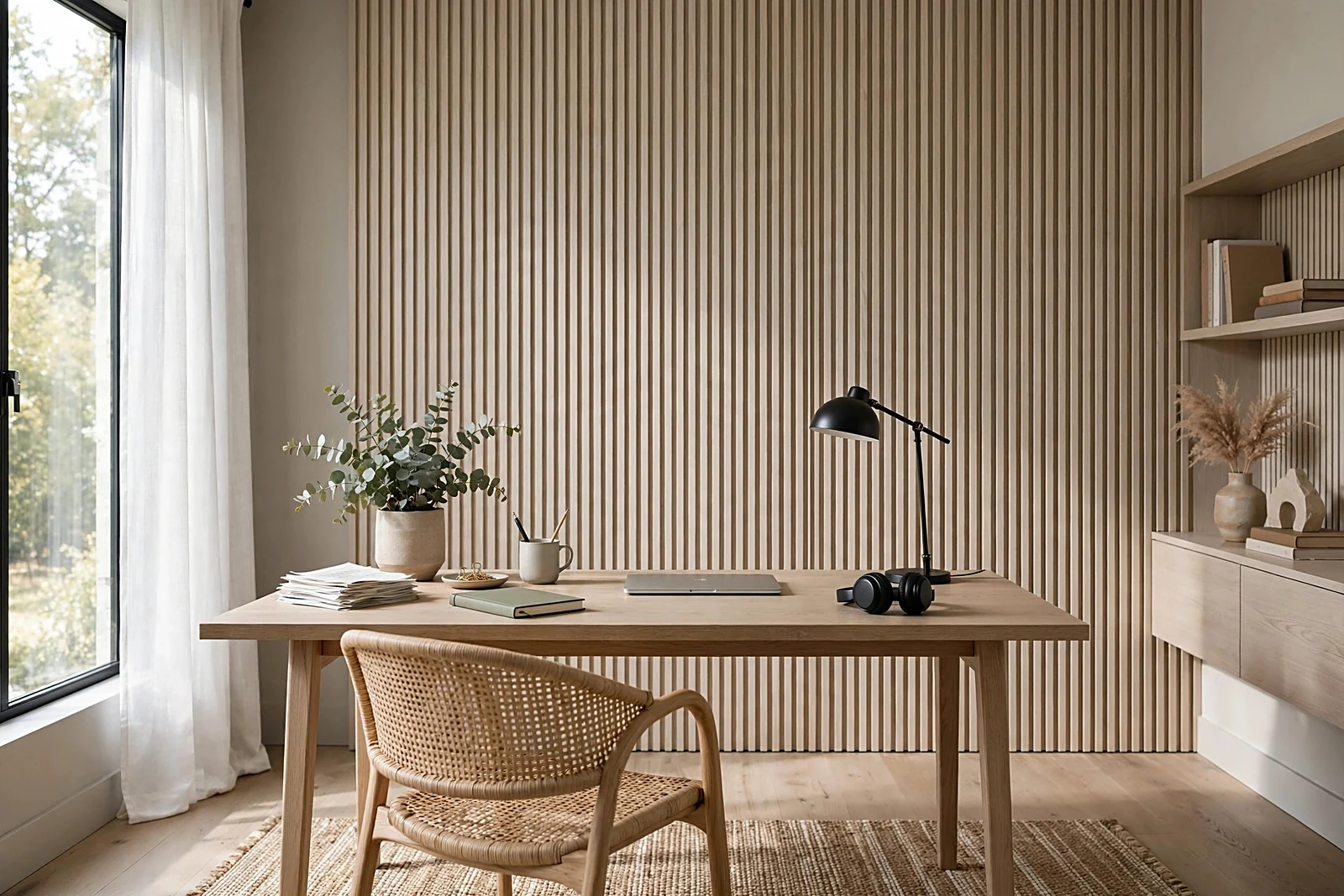
- Home office. The wall behind the desk. It is the wall you face while working and your backdrop on every video call — the one accent that earns its keep daily. See the home office wall panel guide.
- Entryway. The wall you face the moment the front door opens. In many South Florida homes it is short — which is fine: a short, solid first wall makes a stronger first impression than a long, broken one.
The walls NOT to choose
- The window wall. Several windows chop the surface into strips; panels lose their calm, and Florida glare fights the finish all day.
- The door-chopped wall. Doors, vents and returns slice the wall into leftovers. An accent needs one continuous field.
- The slanted or awkward wall. Odd angles make a feature look like an apology. Leave strange geometry quiet and plain.
- The wall nobody sees. Behind the door swing, or facing away from every seat — an accent there decorates the room for no one.
- Two competing walls. Two accents cancel each other and the room feels restless. One wall, chosen well, beats two walls chosen bravely.
In a small room there is one useful exception: the far wall — the wall farthest from the door — can add depth when it is panelled, pulling the eye through the space and making the room read larger.
The light check (do not skip this in Florida)
South Florida light is strong, and it changes everything. The same panel reads warm and quiet on a cloudy morning, bright and cool at noon, and deep again in the evening. Before you commit:
- Look at the chosen wall in the morning, afternoon and evening light the room really gets.
- Notice which hours the room is actually used — a bedroom accent lives mostly in morning and evening light; a living room accent lives through the bright afternoon.
- Treat glossy finishes with respect on sun-hit walls: glare can steal the pattern at midday.
This is also why the AI preview matters: it shows the panel design on your own wall, in your own room's proportions, before anything is ordered.
How the panel choice follows the wall choice
Once the wall is picked, the material almost chooses itself:
- Vertical slats raise the room. SLT-22 Slat panels draw the eye upward — the fix for a focal wall under a low ceiling.
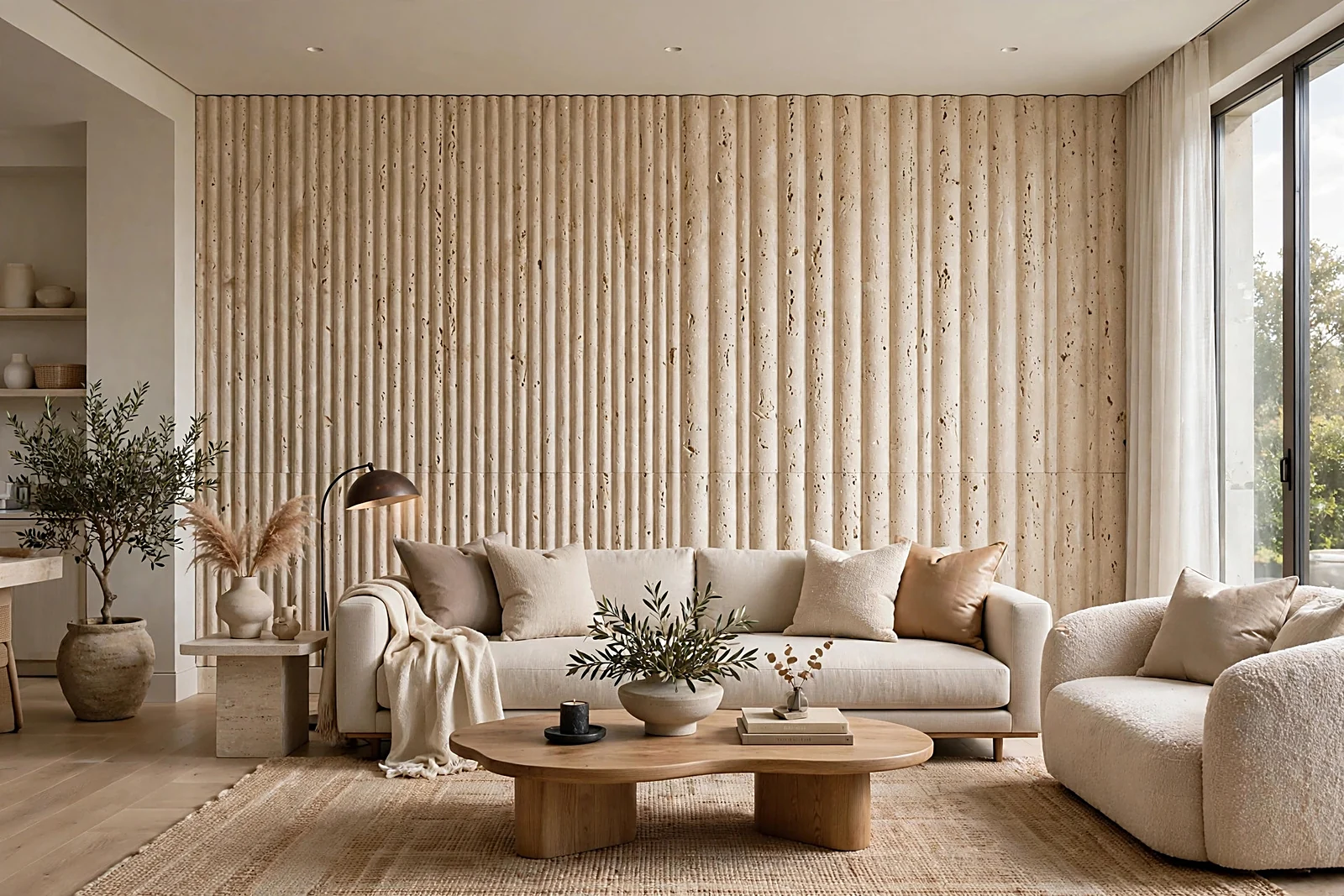
- Continuous stone calms the room. CNT-14 Continuous Pattern runs one quiet stone field across the wall — right for TV walls and fireplace walls where the screen or the fire stays the hero.
- Padded panels belong on the headboard wall. PAD-04 Padded turns the bedroom accent into soft upholstery the bed leans into.
- Warm wood grounds a living room. WOD-05 Wood panels behind the sofa add warmth without noise; TRA-04 Travertine brings the same calm in a lighter, coastal key for dining and entry walls.
One wall, two or three panels in a considered mix — that is the pattern behind most of the rooms in our portfolio of designs.
The one-wall rule — and rooms with no obvious focal wall
Keep it to one accent wall per room. The single exception people imagine — wrapping panels around a corner — works only when it reads as one continuous feature, not two competing walls. And if a room has no obvious focal wall at all, create one: choose the wall behind the sofa or behind the bed, arrange the furniture toward it, and the room gains the anchor it was missing. Open-plan South Florida layouts need this most: there, the accent wall does double duty and zones the space, marking where living ends and dining begins without a partition.
The Florida footnote
Broward County and Boca Raton homes share two facts that shape this choice. First, bright sun — light here is not a detail, it is a design material, which is why the light check above is not optional. Second, open-plan layouts dominate newer homes from Fort Lauderdale to Boca Raton: with few internal walls, the one accent wall often carries the whole identity of the main space. Choose it by the doorway test and it will carry it well.
What it costs, honestly
Choosing the wall costs nothing; covering it follows the studio's published tiers: stock design from $850; a design fitted to your wall usually $2,200–$2,700; full custom turnkey from $9,999. The exact quote depends on wall size, the materials in the mix, and the state of the wall itself. The full breakdown lives in our guide to wall panel installation cost in South Florida.
See your wall before you decide
Still torn between two walls? Send a photo of the room through our wall form and see your own wall — the doorway-test winner — wearing panels in a free AI preview. Most people know within seconds of seeing it: the right wall looks inevitable.
WallPanels Studio — decorative wall panel design and installation across Broward County and Boca Raton, South Florida. AI concept imagery in this article is visualisation, not photography of completed work.