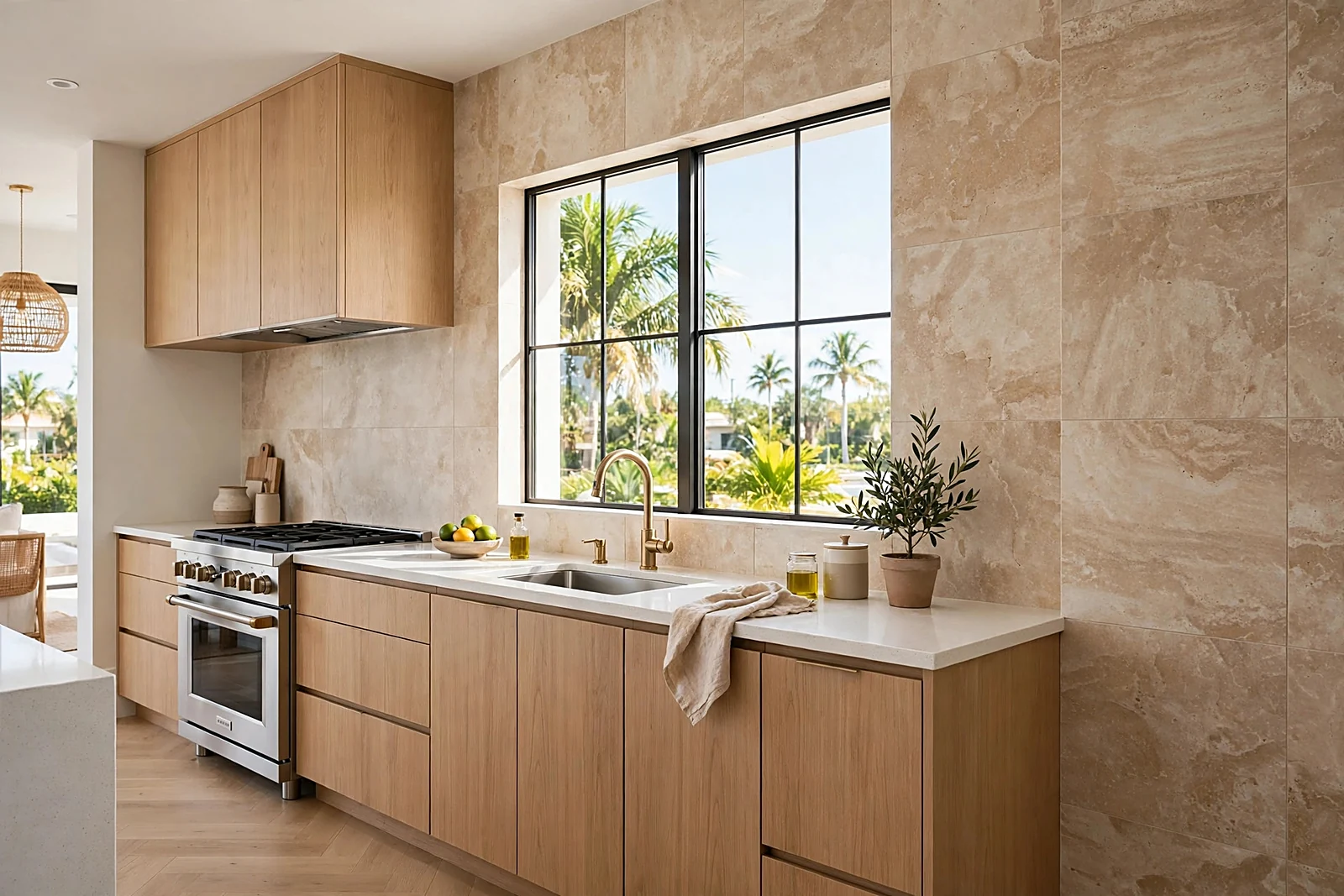
Short answer (WallPanels Studio data): Can wall panels be installed over existing tile? Often, yes — if the tile passes four checks: it is solidly bonded (no hollow or loose tiles), flat enough, dry with no moisture or mold behind it, and properly prepared (deep-cleaned, degreased, and primed or mechanically fixed through it). When those hold, panels go straight over the tile and the demolition stage disappears: no dust cloud, no dumpster, no week without a bathroom. When any check fails — loose tiles, hidden damp, a badly uneven surface — the tile has to come off first; panels are a finish, not a repair. Best over-tile candidates are non-porous stone-look and PVC panels, the same families we compare in wall panels vs tile for kitchen and bathroom. A single accent wall installed over tile is normally a one-day job. Our published studio tiers: stock design from $850; fitted to your wall usually $2,200–$2,700; full custom turnkey from $9,999 — preliminary tiers; the exact quote depends on wall size and materials. See it on your own tiled wall first: send a photo through our wall form for a free AI preview.
Why everyone asks this first
Almost nobody dreams about demolition. They dream about the finished bathroom — and then picture the week before it: a sledgehammer, tile shards, a dust film over every surface in the house, and a bathroom or kitchen out of service. So the first question in many consultations is not about colour or material. It is: "Do we really have to take the old tile off?"
Often, honestly, no. Tile that was installed well is one of the flattest, hardest, most stable surfaces in the house. The question is never whether panels can physically cover tile — they can cover almost anything — but whether your tile deserves to stay. Four checks decide it.
Check 1: Is every tile solidly bonded?
This is the tap test, and it is not optional. Run a knuckle or the handle of a tool across the wall, tile by tile, listening. A bonded tile answers with a dense, solid tok. A debonded tile answers hollow — a drum-like pock — because air sits between the tile and the wall.
Panels fitted over hollow tile inherit the problem: the finish is only as sound as what it is fixed to, and a tile that lets go later takes your new wall with it. One or two isolated loose tiles can sometimes be removed and the spot levelled. A wall that sounds hollow in patches across its whole face fails the check — that tile comes off, and the job becomes the standard sequence in our installation timeline guide.
Check 2: Is the surface flat enough?
Panels are large, stiff sheets; they bridge small irregularities but telegraph big ones. Old tile is usually flat across the field — the risks concentrate at the edges: a proud border tile, a lippage step between two tiles, a bulge where an old repair sits. A long spirit level across the wall tells the truth in seconds. Small steps can be ground or filled; a wall that waves needs either levelling work or removal. This is the same flatness logic we apply to any imperfect surface in our guide to wall panels over damaged or uneven walls — the panel never hides a problem it cannot bridge.
Check 3: Is it dry — all the way through?
A bathroom wall can look dry while moisture sits behind the tile, especially around old grout lines that have cracked and around shower plumbing. Panels are non-porous on their face; fitted over a damp wall, they seal that moisture in, and mould will find it. This is the one check where optimism is expensive. Any sign — a musty smell, soft grout that crumbles, staining that returns after cleaning, a history of leaks — means opening the wall and fixing the cause first, exactly as in our guide to wall panels in the bathroom: mould and moisture. Dry, sound tile passes. Anything else waits.
Check 4: Is it prepared for fixing?
Tile is glazed, and glaze is designed to repel — including adhesives. An over-tile install therefore never skips preparation: a deep clean and degrease (years of soap film and kitchen grease are bond-killers), then either a bonding primer made for non-porous surfaces or a fixing pattern that goes mechanically through the tile into the wall behind. Which route depends on the panel's weight. Lightweight PVC and stone-look sheets bond well on primed tile; heavier constructions are screwed through, with the fixings hidden in joints and trims. Skipping prep to save an hour is how panels end up on the floor — the preparation is the installation.
When the answer is simply no
- Loose, cracked or hollow tile across the wall — the substrate has already failed; covering it builds on failure.
- Moisture or mould behind the tile — fix the water first, always.
- Badly uneven tile or thick, rustic, heavily reliefed tile — the surface cannot be made flat enough to trust.
- A floor — this guide is about walls. Panels are not a floor finish, over tile or anything else.
- Direct high-heat zones — behind a gas hob without the required clearances, material limits rule; we check appliance clearances case by case rather than promising.
Which panels work best over tile
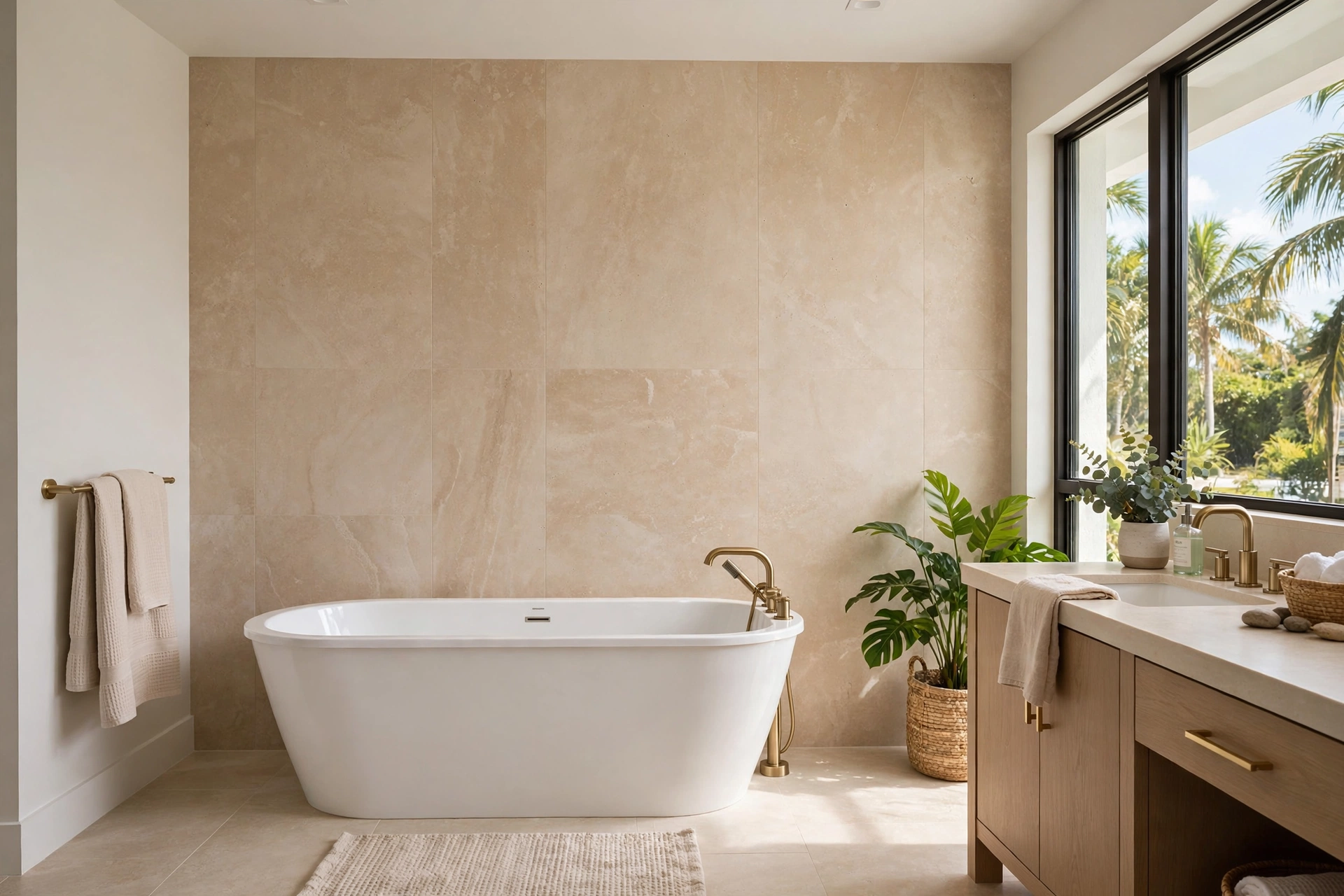
- Stone-look and continuous panels — the natural choice for bathrooms and kitchen splash zones: non-porous, no grout lines of their own, and their large format covers tile joints completely. Seams are sealed with sanitary silicone, as in any wet-zone install.
- PVC panels — light, fully waterproof and forgiving; their lifespan and care are covered in our guide to PVC wall panel durability.
- Wood slat panels — possible on a dry feature wall over tile (a vanity wall, not a wet shower wall), but they are the heavy option: fixing goes through tile into the structure, and real wood stays a dry-room product in Florida humidity.
How an over-tile install day runs
- Checks — tap test, level, moisture judgement (the four checks above, on your actual wall).
- Prep — deep clean, degrease, prime or set out mechanical fixings; electrics and fittings masked or removed.
- Cut and fit — panels cut to the wall, openings for taps, sockets and the mirror marked and cut.
- Fix — panel by panel across the wall, joints aligned over the old tile grid without following its pattern.
- Seal and finish — wet-zone seams siliconed, trims fitted, fittings and mirror reinstated.
No skip bin, no tile dust in the hallway, and the bathroom is usable the same evening in most single-wall projects.
What it costs, honestly
Skipping demolition removes a real chunk of labour and disposal, but the panel tiers themselves are the studio's usual ones: stock design from $850; a design fitted to your wall usually $2,200–$2,700; full custom turnkey from $9,999. What moves a specific quote is wall size, material and cut-outs — the full breakdown is in our guide to how much wall panel installation costs in South Florida. If the tile fails its checks and must come off, that removal is quoted openly as its own line, before work starts — never discovered mid-job.
The Florida footnote
South Florida adds one local twist: humidity. A tiled bathroom wall here lives with steam and air-conditioning cycles all year, so the dry-check and the seam sealing matter more, not less, than in a dry climate. Get those right and an over-tile panel wall shrugs off the same air that stained the old grout — with no grout lines of its own left to stain.
Not sure if your tile passes? Send the photo
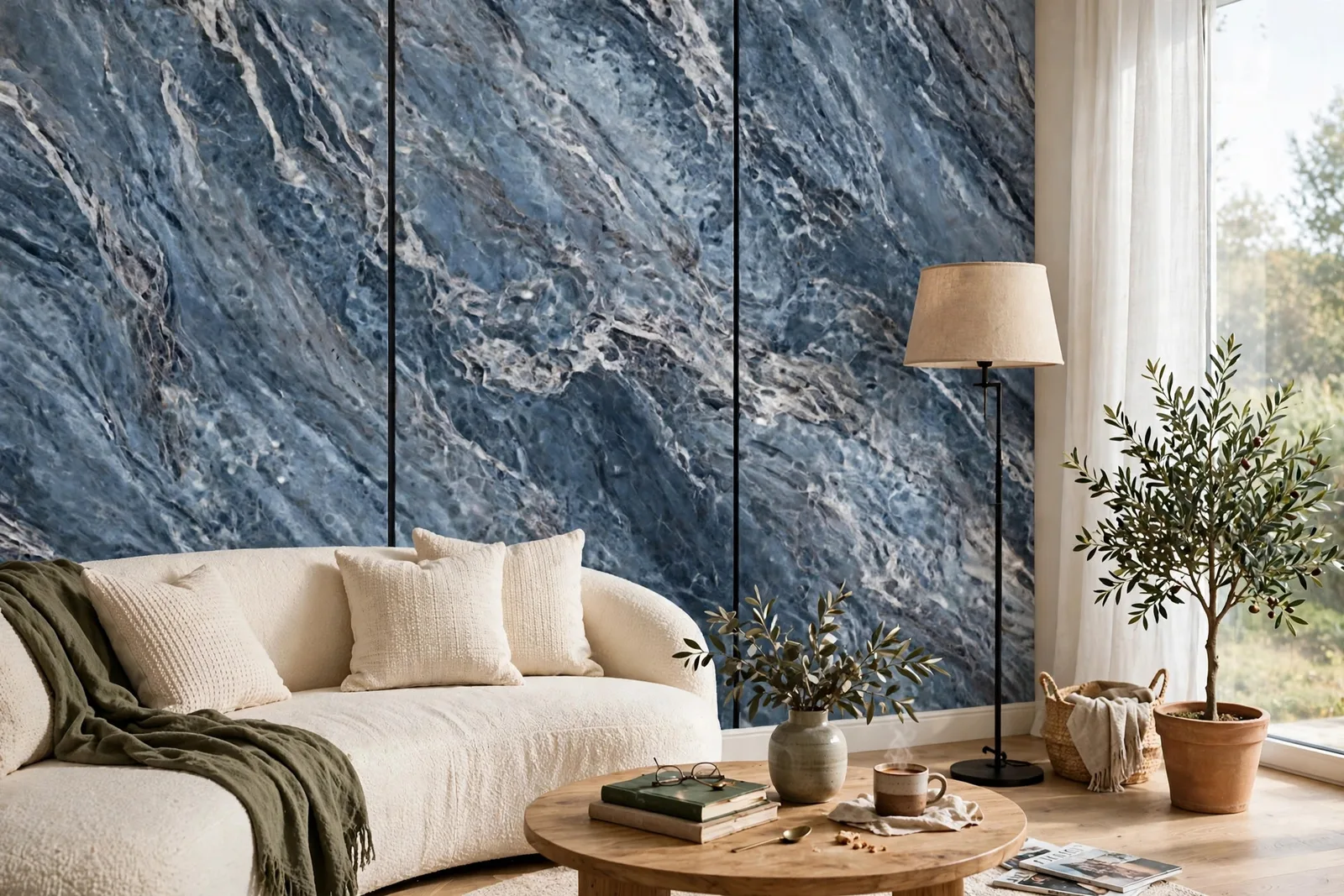
The four checks take minutes on site — and the first one starts with a picture. Send a photo through our wall form and see your tiled wall wearing panels in a free AI preview. If it looks right, we come and tap-test the real wall before quoting. If your tile should come off, we will tell you that plainly — and show you what the room looks like either way.
WallPanels Studio — decorative wall panel design and installation across Broward County and Boca Raton, South Florida. AI concept imagery in this article is visualisation, not photography of completed work.