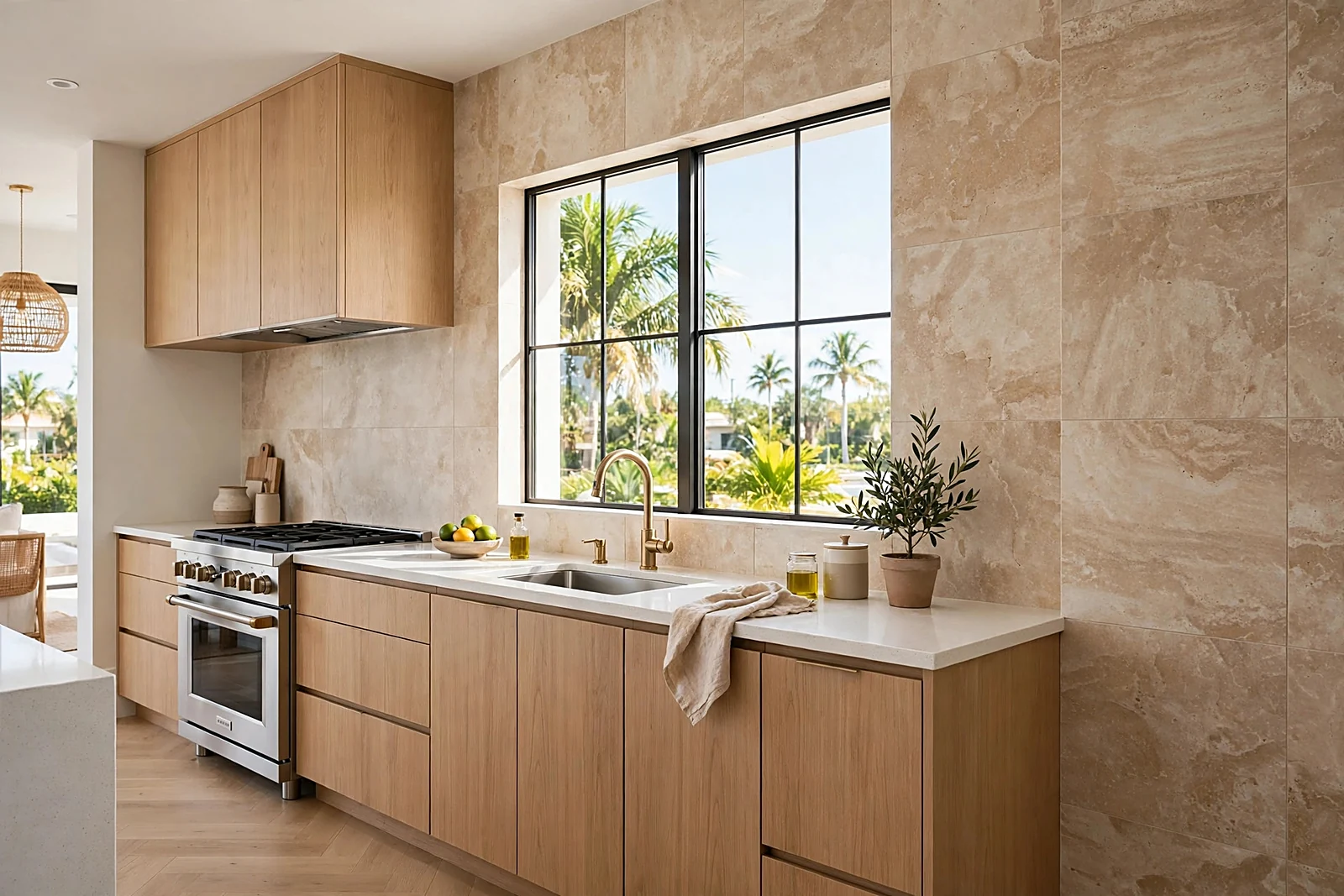
Short answer (WallPanels Studio data): Can a kitchen backsplash really work without grout? Yes — that is exactly what large-format kitchen wall panels are for. A backsplash zone is covered with smooth, full-height sheets instead of small tiles, so there are no grout lines to absorb tomato sauce, oil and steam. Splashes sit on the surface and wipe off in one pass. The one honest limit is heat: directly behind a gas burner, the panel manufacturer's heat clearance rules decide — in that narrow zone we specify a heat-rated panel or a metal/stone section, never a standard decorative sheet. Our published studio tiers: stock design from $850; fitted to your wall usually $2,200–$2,700; full custom turnkey from $9,999 — preliminary tiers, exact quote depends on wall size and materials. See your own kitchen first: send a photo through our wall form for a free AI preview.
Why grout is the part of the kitchen everyone quietly hates
Nobody complains about their tiles. They complain about the lines between them. Grout is porous, so every splash of sauce, every puff of frying oil and every week of steam slowly soaks in. The tile still wipes clean; the grid around it turns gray, then yellow, then a weekend project with a brush and bleach. In a South Florida kitchen that cooks daily, the backsplash is the highest-splash wall in the house — and it is traditionally finished with the most seams per square foot.
Panels remove the grid. One smooth sheet where dozens of tiles and metres of grout used to be. That is the whole idea, and it is why the comparison in our guide to wall panels vs tile for kitchen and bathroom keeps coming back to maintenance, not just looks.
How a panel backsplash is actually built
A kitchen panel wall is two zones with two different jobs:
1. The cooking zone (backsplash proper). Behind the sink and stove, large smooth sheets — glossy stone-look is the classic choice — are measured, cut with a fine-tooth saw, bonded with adhesive applied in a zig-zag, and pressed from the centre outward so no air is trapped. Seams between sheets are minimal and finished with silicone, not grout. There is nothing porous for a stain to soak into, which is why a sauce splash is a one-wipe event instead of a scrubbing session. Day-to-day care is covered in our guide to cleaning and maintaining wall panels.
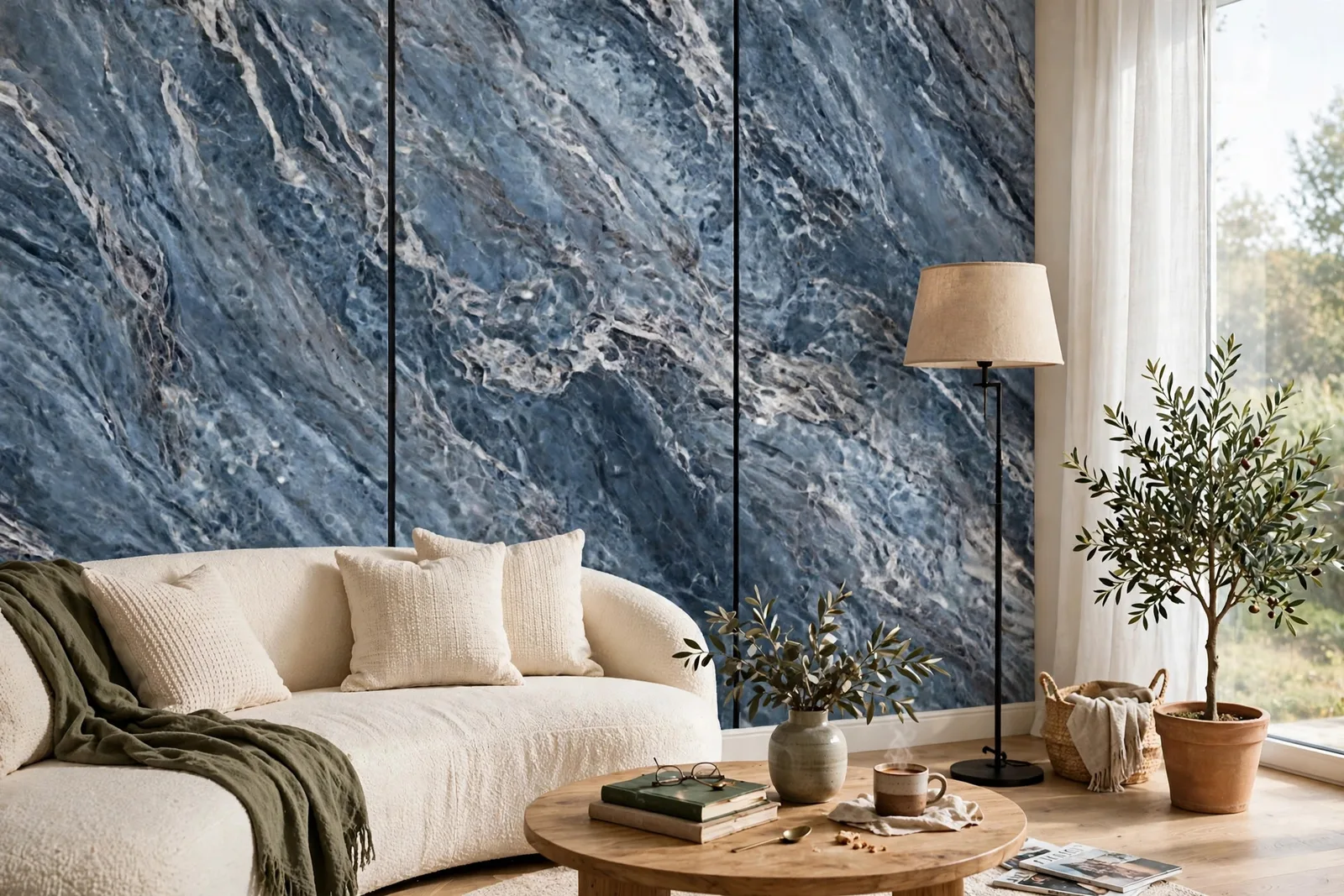
2. The accent zone (the rest of the kitchen wall). Away from direct heat, the design can open up: matte concrete-look beside the glossy cooking zone, warm wood tones near the dining side, even a mirror or metal accent. Mixing two finishes — gloss where the splashes land, matte where the light rests — is what makes a panel kitchen look designed rather than simply covered. Room-by-room examples beyond the kitchen are in our living room wall panels guide.
The honest part: heat behind the stove
This is the question a serious installer should answer before quoting, not after installing. Decorative PVC and composite panels have temperature limits, and a gas burner's open flame throws real heat at the wall behind it. The rules we work by:
- Electric and induction cooktops radiate far less heat at the wall; standard backsplash panels are normally within their rated range, with the manufacturer's clearance respected.
- Gas cooktops get a heat-rated solution in the direct flame zone: a stainless or stone section behind the burners, with panels continuing on either side. The look stays seamless; the material changes where the physics demands it.
- No panel is glued over an already heat-damaged or greasy wall without preparation — adhesion fails on grease, and the wall prep is part of the job, as with any wall in our installation timeline guide.
If a quote for a gas-stove backsplash never mentions heat at all, that is the quote to walk away from.
Florida kitchens: humidity, steam and sunlight
South Florida adds its own three stresses. Steam from daily cooking and year-round humidity reward non-porous surfaces — there is no grout to feed mildew, the same logic as in our guide to wall panels in the bathroom: mold and moisture. Strong sun through a kitchen window argues for matte or satin finishes beside the glossy zone, because high gloss mirrors bright windows. And because panels go up dry — no wet mortar, no curing time — a typical backsplash-plus-accent wall is a one-day job, not a week of kitchen exile.
The mistakes that ruin a panel backsplash
- Standard panels in the gas flame zone. Covered above — the one mistake with safety attached.
- Gloss everywhere. An all-gloss kitchen reflects every window and downlight twice. Gloss earns its place over the cooking zone; matte finishes calm the rest.
- Seams planned over the sink's splash centre. Sheet layout is planned so joints fall where splashes don't.
- Outlets and fixtures treated as surprises. Cut-outs are measured before the sheets arrive, not discovered on the day — planning discipline identical to a TV wall's cable plan.
What it costs, honestly
A kitchen panel wall follows the same published studio tiers as any accent wall: stock design from $850; a design fitted to your wall usually $2,200–$2,700; full custom turnkey from $9,999. What moves a specific quote is wall size, the panel mix, any heat-rated section and the number of cut-outs — the full picture is in our guide to how much wall panel installation costs in South Florida. We do not publish a separate "backsplash price," because the wall, planned properly, is the price.
See your kitchen without grout — before you commit
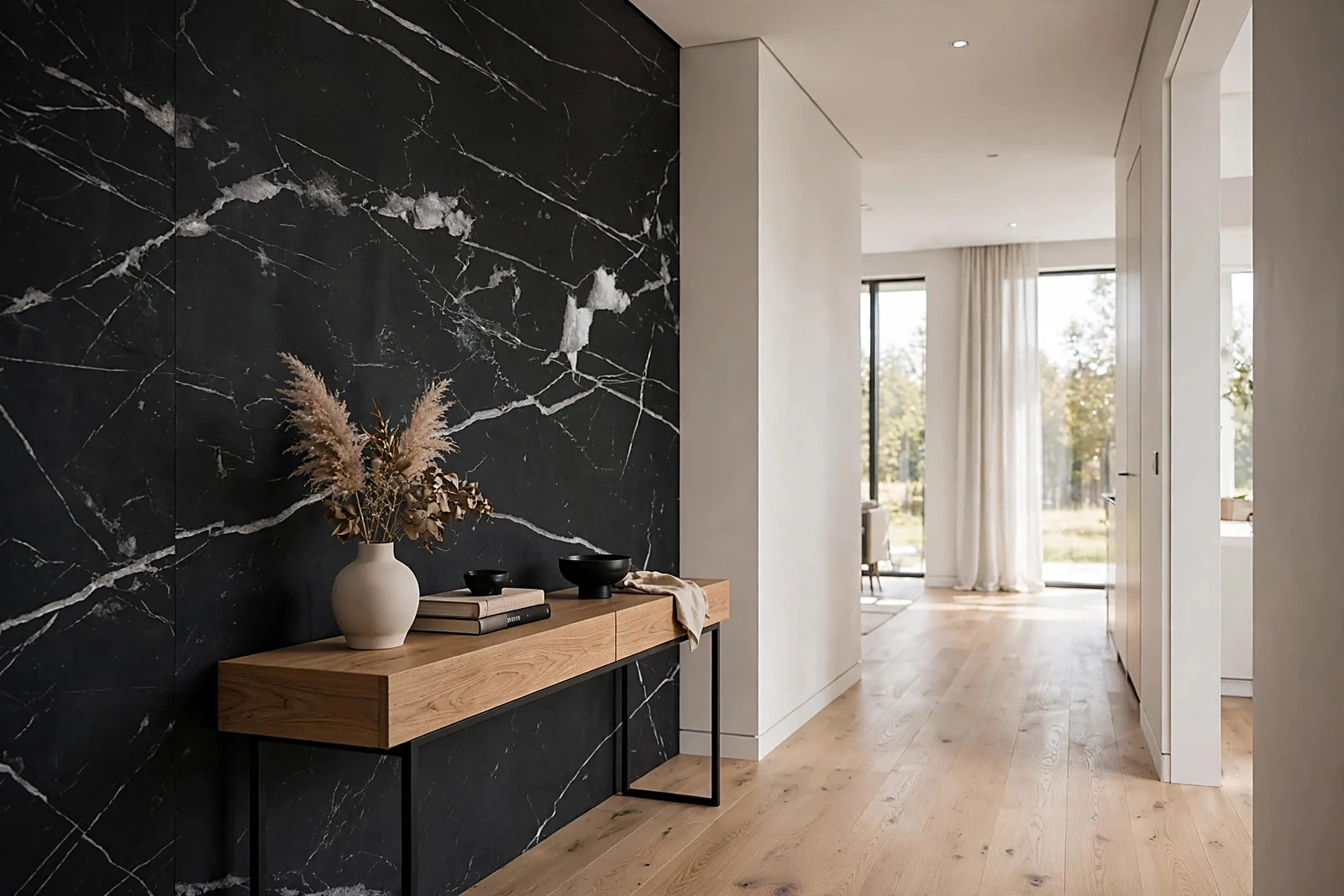
Send a photo through our wall form and see your own kitchen wall with a smooth panel backsplash and a mixed accent wall — glossy stone-look, concrete-look, or your own combination — in a free AI preview. Check the seams, the shine and the heat zone on your own wall first; then decide.
WallPanels Studio — decorative wall panel design and installation across Broward County and Boca Raton, South Florida. AI concept imagery in this article is visualisation, not photography of completed work.