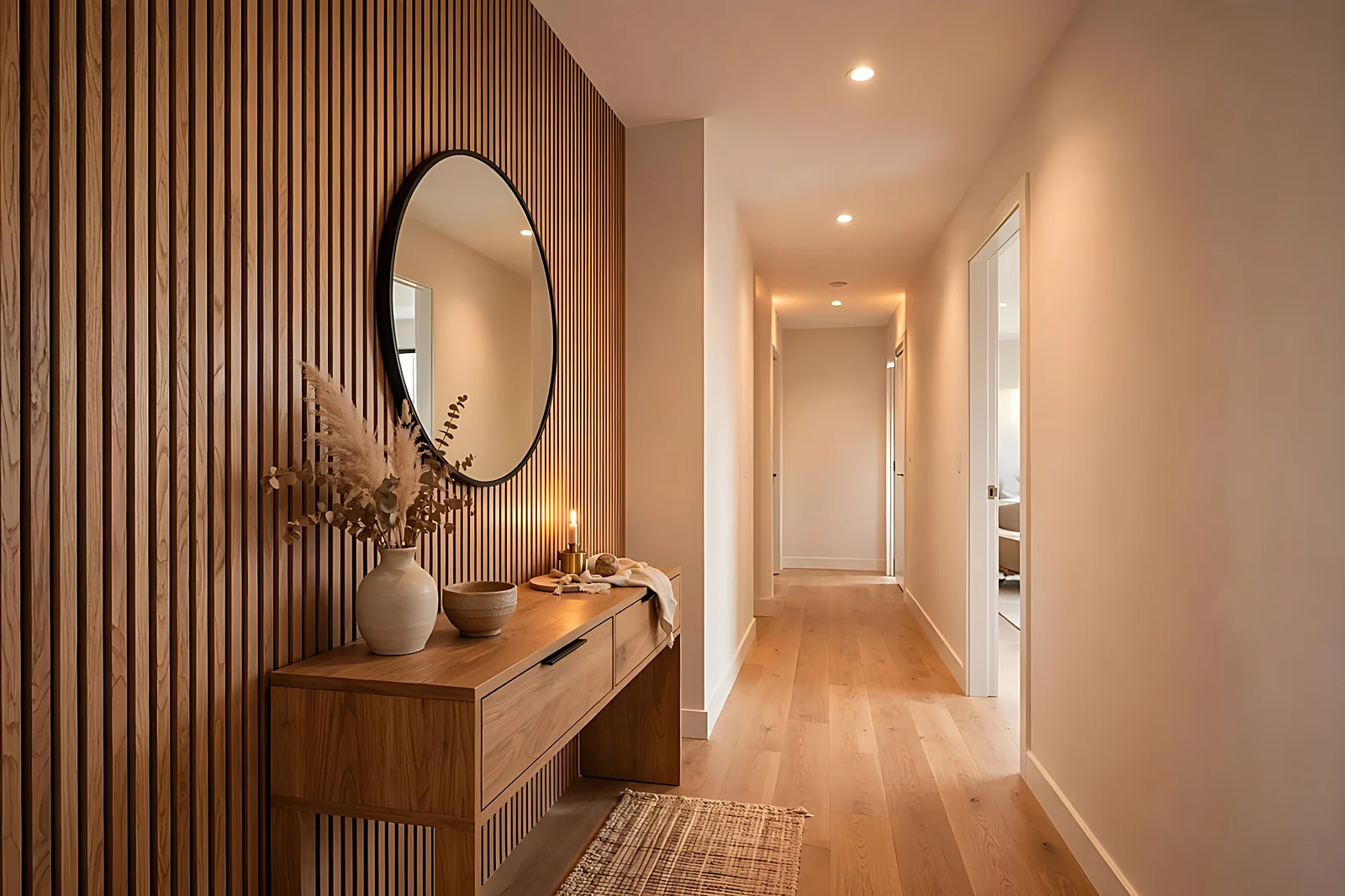
Short answer (WallPanels Studio data): What is the best finish for an entryway or hallway wall? A wipe-clean decorative panel surface — not another coat of flat paint. The entryway is the highest-traffic wall in the home: every bag swing, shoe kick and key scratch lands on the same narrow band, and flat paint records all of it. Large-format panels (travertine-look, wood, slat, 3D textures) cover that rub zone with a surface that wipes clean in seconds, while their texture and vertical lines make a narrow hall read wider and calmer. A typical entryway accent wall is a one-day installation. Our published studio tiers: stock design from $850; fitted to your wall usually $2,200–$2,700; full custom turnkey from $9,999 — preliminary tiers, exact quote depends on wall size and materials. See your own entryway first: send a photo through our wall form for a free AI preview.
The wall nobody chooses — and everybody sees
Homeowners plan the living room, the TV wall, the bedroom. The entryway gets whatever paint was left over. Yet it is the first wall a guest reads and the last one you see leaving — and it works harder than any other wall in the house. Bags swing against it at hip height. Shoes kick it. Wet umbrellas, delivery boxes, stroller wheels and dog leads all land on the same square metres. Within a year or two, that band of wall is a grey archive of scuffs, no matter how good the paint was.
That is why the entryway question is different from the living room wall panels question. In the living room, panels are mostly about looks. In the hallway, they are about looks and survival.
The one-week wipe test
Here is the honest test we suggest before choosing anything. Clean one corner of your entryway wall properly — sponge, mild cleaner, ten minutes. Then watch it for a week of normal life. In most busy households the marks are back within days: a bag corner here, a shoe rubber streak there. If the clean patch does not survive a week, the problem is not your cleaning. The wall's surface is simply the wrong material for the traffic it carries, and repainting restarts the same clock.
Panels break the cycle because the surface itself changes: smooth stone-look and wood panels are non-porous at the face, so a scuff sits on the panel instead of soaking into paint, and one wipe with a damp cloth removes it. Day-to-day care is the same routine as in our guide to cleaning and maintaining wall panels — the difference is that in the hallway you will actually need it weekly, and it takes seconds.
Which panels work in an entryway — and why the mix matters
An entryway wall has two zones with two different jobs, and the designs that work best treat them differently:
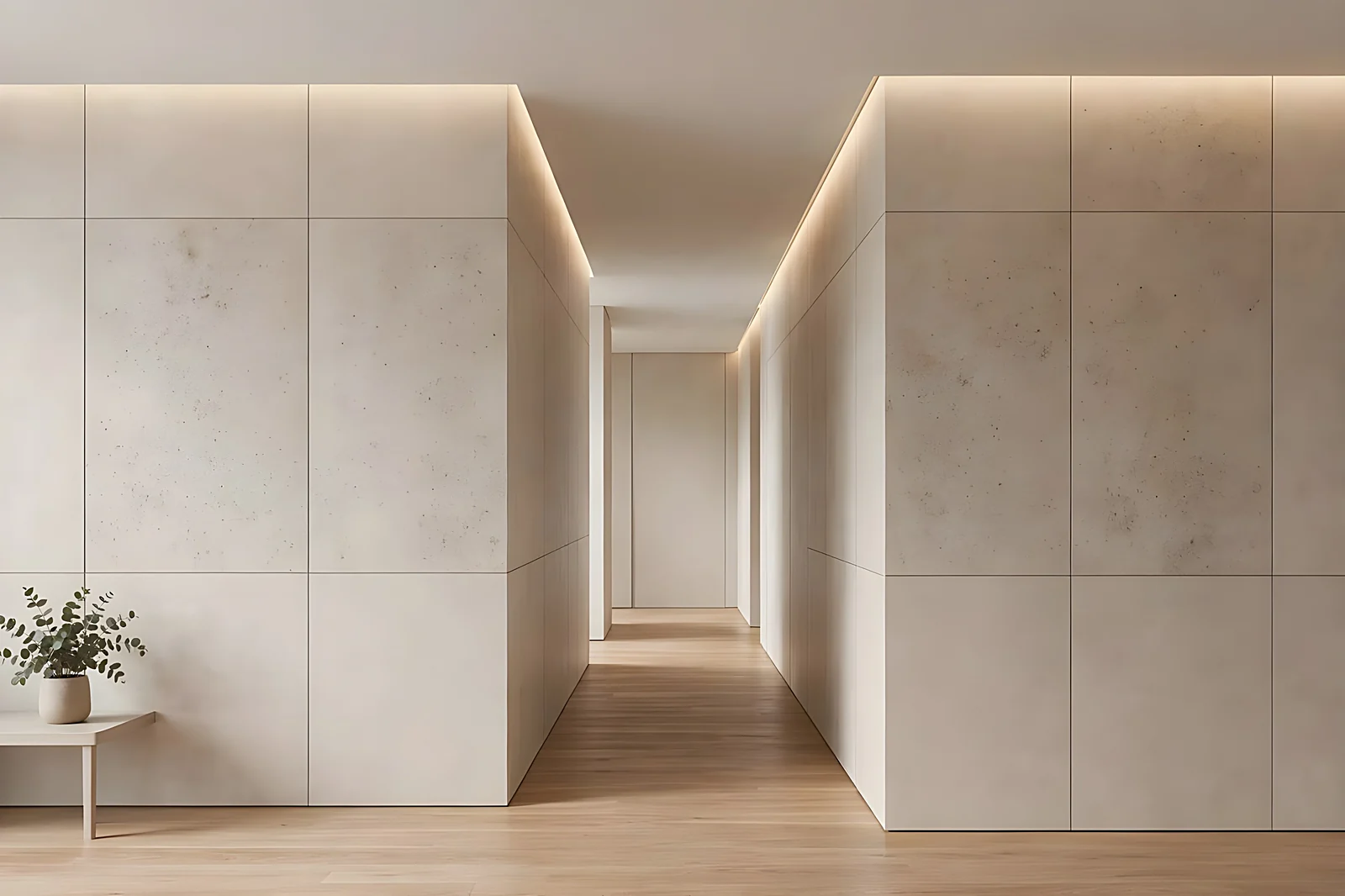
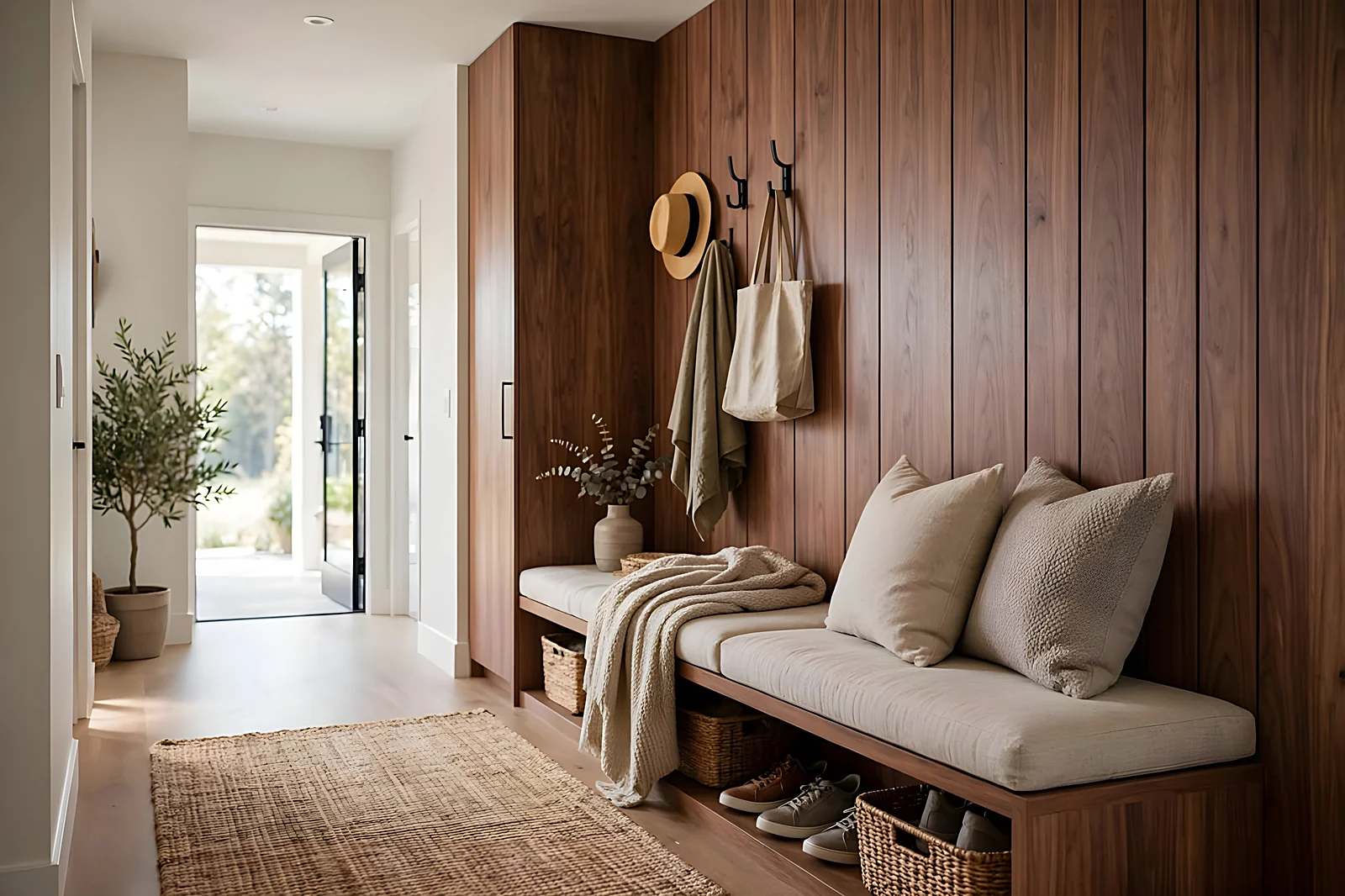
1. The rub zone (floor to roughly hip height, and around the door swing). This band takes the physical hits. Dense, smooth-faced panels earn their place here: travertine-look and other stone-look sheets, wood panels, and glossy or matte stone finishes. They resist scuffing visually, too — a textured beige travertine hides a faint mark far better than flat white paint ever will.
2. The impression zone (eye level and above). This is where the first impression is made. Vertical slat panels stretch a low hall upward; a 3D wave or textured centre panel gives the eye something to land on; a mirror section doubles the light in the windowless halls most South Florida homes have. Mixing the two zones — a hard-wearing stone-look below and beside the door, warmth or texture at eye level — is what makes an entryway look designed rather than armoured.
Two honest limits. First, panels are not armour: a bicycle pedal dragged hard along any surface can mark it, and the right answer for a true impact corner is a corner profile, not a hope. Second, in a very narrow hall, thick 3D textures eat a little visual width — slim panels (most of our hallway mixes are low-profile) keep the passage feeling open, the same planning logic as a bedroom headboard wall, where the panel must never crowd the room.
Light: the hallway problem panels quietly solve
Most hallways in Broward and Boca Raton homes have no window at all. Flat paint in a windowless hall does nothing with the little light available — it just shows it as grey. Texture changes that. A slat wall turns one ceiling light into a rhythm of thin shadows; a stone-look with a satin face reflects a soft sheen down the length of the hall; a mirror panel opposite the living-room opening borrows real daylight from the next room. In our entryway installs, the "the hall feels wider" comment almost always comes from light behaviour, not from the colour — a point we also make in our guide to wall panel LED lighting, since a slim LED line along a hallway panel run is the single cheapest way to make the whole passage feel intentional at night.
Florida specifics: humidity at the front door
The entryway is also the house's humidity gate. Every door opening in a South Florida summer lets in a wave of wet air, and the hallway wall is the first surface it meets — often with air-conditioning condensation cycling on the same wall. Non-porous panel faces do not feed mildew the way a scuffed, micro-cracked paint film can, which is the same reasoning as our guide to wall panels in the bathroom: mold and moisture, applied to the front of the house. The wall behind the panels still needs to start dry and sound; panels over an already damp or damaged wall are a mistake we cover in panels over damaged walls.
The mistakes that ruin an entryway wall
- Repainting the rub zone and calling it fixed. The one-week wipe test exists precisely because paint loses this fight on a schedule.
- One dark colour in a windowless hall. Dark panels can look superb — with light planned for them. Without it, a narrow hall becomes a tunnel.
- Thick, deep-relief panels in the tightest passage. Slim profiles keep the width; save deep 3D for the wider impression zone or the living room.
- Ignoring the door swing and the switch plates. Panel layout is planned around the door's full swing, outlets and switches — cut-outs measured before the sheets arrive, exactly as with a TV wall's cable plan.
- Forgetting the skirting line. The bottom 15 cm takes the shoe kicks; the panel run and its trim should be detailed for it, not stopped hopefully above it.
What it costs, honestly
An entryway or hallway wall follows the same published studio tiers as any accent wall: stock design from $850; a design fitted to your wall usually $2,200–$2,700; full custom turnkey from $9,999. Hallways are often smaller walls, which is why they frequently land at the lower end — but the mix, the number of cut-outs and any lighting move the exact quote, as detailed in our guide to how much wall panel installation costs in South Florida. Most single entryway walls install in one day, on the pattern in our installation timeline guide.
See your entryway first — before you commit
Send a photo through our wall form and see your own hallway wall with a panel mix — travertine-look and wood, slats, or your own combination — in a free AI preview. Check the rub zone, the light and the door swing on your own wall first; then decide.
WallPanels Studio — decorative wall panel design and installation across Broward County and Boca Raton, South Florida. AI concept imagery in this article is visualisation, not photography of completed work.