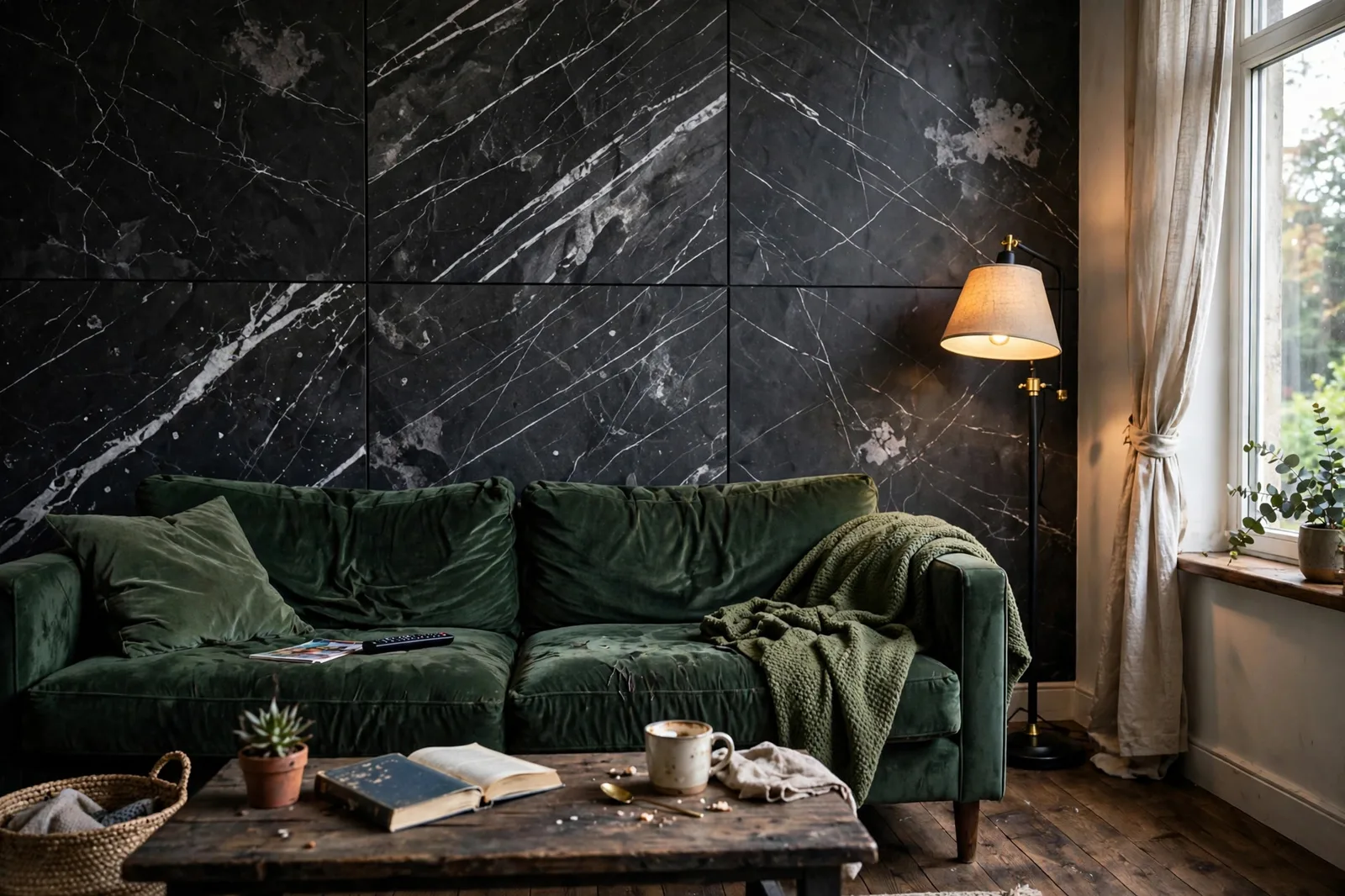
Short answer (WallPanels Studio data): Wall panels vs wallpaper vs paint — which lasts longer and costs less over time? On lifespan, panels win, paint loses. Published US guides put interior paint at roughly 3–7 years before it looks tired and needs a fresh coat, wallpaper at 10–15 years in a dry room with good installation, and decorative panels at 10–20 years for PVC, 15–30 years for wood and MDF, and longer for stone-look panels. On upfront cost, the order reverses: paint is by far the cheapest, wallpaper sits in the middle, panels cost the most to install. Over a 10-year window the gap narrows a lot, because paint is usually bought two or three times while a panel wall is bought once. In South Florida there is one more deciding factor — humidity. Wallpaper seams are the first to lift and bubble in damp air, paint can blister, and the right panel material (PVC in damp zones, not raw MDF) shrugs humidity off. So: choose paint if you change colors often or may move soon, wallpaper for pattern in a dry bedroom, and panels for the one wall you want to finish once and stop thinking about — a TV wall, a headboard wall, an entry wall in Fort Lauderdale, Hollywood, Boca Raton and across Broward County.
The comparison in one table
These are published US guide ranges, not WallPanels Studio prices — we do not publish panel prices in articles, because the real figure depends on your wall, material and design, and it is set after a free consultation. Use the table to compare the shape of each option, not to budget a specific job.
| Finish | Typical installed cost (published US ranges) | Realistic lifespan | Redo cycle in 10 years | Weak point |
|---|---|---|---|---|
| Interior paint | About $1–$4 per sq ft installed | 3–7 years | Usually 2–3 times | Scuffs, fading, stains; looks tired long before it fails |
| Wallpaper | Materials about $1–$5 per sq ft, plus installation labor | 10–15 years in dry rooms, less in humidity | Usually once, if it survives humidity | Seams lift and bubble in damp air; hard to repair invisibly; removal is slow |
| PVC wall panels | About $3–$9 per sq ft installed | 10–20 years | Once | Lower-end prints can look flat; wrong style dates fast |
| Wood / MDF panels (incl. slat walls) | About $5–$15 per sq ft installed | 15–30 years | Once | MDF dislikes standing moisture; needs the right room |
| Stone-look / 3D panels | About $10–$32+ per sq ft installed | 20–50 years | Once | Highest upfront cost; a strong look you commit to |
Sources for these ranges are named at the end of this article. Two honest warnings about any such table. First, ranges are wide because quality is wide: a premium washable paint outlasts a bargain paint, and a cheap panel is not a 20-year panel. Second, Florida labor and material prices move — treat every figure here as orientation, not a quote.
The 10-year math for one accent wall
Take one typical accent wall of about 100 square feet — roughly a TV wall in a living room. Using only the published ranges above:
- Paint: $100–$400 per round, bought 2–3 times in ten years = roughly $200–$1,200, plus moving furniture, masking, drying time and a room out of use each round.
- Wallpaper: materials alone run $100–$500 for that wall, plus installation labor, bought once if the room stays dry — but if seams fail early in humidity, you pay for removal as well, and wallpaper removal is famously slow, sometimes damaging the wall surface underneath.
- Panels: PVC roughly $300–$900 installed, wood/MDF roughly $500–$1,500, stone-look $1,000 and up — bought once in the same ten years, with no repaint weekends in between.
Read honestly, this math does not say panels are always cheaper. It says something narrower and more useful: paint's price advantage shrinks every time you redo it, and panels' price disadvantage is paid only once. If you will keep the wall for a decade or more, the totals often meet. If you will move, sell or redecorate in three years, paint wins the math easily and panels never pay back. Our are wall panels worth it guide works through that payback question in more depth.
How South Florida humidity changes the answer
In a dry climate this comparison is mostly about money. In Broward County and South Palm Beach County, moisture gets a vote.
- Wallpaper is the most humidity-sensitive finish of the three. Its weak points are the seams and edges: damp air softens adhesive, corners lift, bubbles form, and in a poorly ventilated room mold can grow behind a lifted section. Vinyl wallpapers resist surface moisture better than paper ones, but the seam problem remains. This is the same mechanism we detail in our guide to wall panels in a bathroom: mold and moisture.
- Paint copes better, but is not immune. Quality acrylic paint on a properly prepared, dry wall handles normal indoor humidity well. On a damp wall it blisters and peels, and in steamy bathrooms even good paint ages faster — which is one reason painted bathrooms join the 3–5 year end of the repaint cycle.
- Panels depend entirely on material. PVC panels do not absorb water and are the usual choice for damp-prone walls — see how long PVC panels actually last. Wood and MDF panels are excellent in living rooms and bedrooms but should not be put where they stay wet; material choice by room is covered in which panel material survives Florida humidity.
If your wall has an actual moisture problem — a leak, condensation, damp drywall — none of the three finishes fixes it. Paint hides it briefly, wallpaper traps it, panels cover it. Fix the moisture first; our guide to panels over damaged or uneven walls explains what a wall needs before any finish goes on.
Living with each finish: maintenance and repair
- Paint is the easiest to touch up: keep leftover paint, dab a scuff, done. It is also the finish that needs touching up most often, because it has no protective surface — every bag corner and chair back writes on it directly.
- Wallpaper needs little day-to-day care in a dry room and wipeable vinyl types clean well. The problem is repair: a torn or stained section rarely patches invisibly, because pattern matching and batch color differences show. Damage often means redoing a whole wall.
- Panels are the hardest surface of the three: most marks wipe off, slats and textured faces hide minor scuffs that would shout on flat paint, and a single damaged panel can often be replaced without redoing the wall — especially with mechanically fixed systems, as covered in can wall panels be removed without damaging the wall. Day-to-day care is simple dusting and an occasional damp wipe; the full routine is in how to clean and maintain wall panels.
The design difference nobody prices
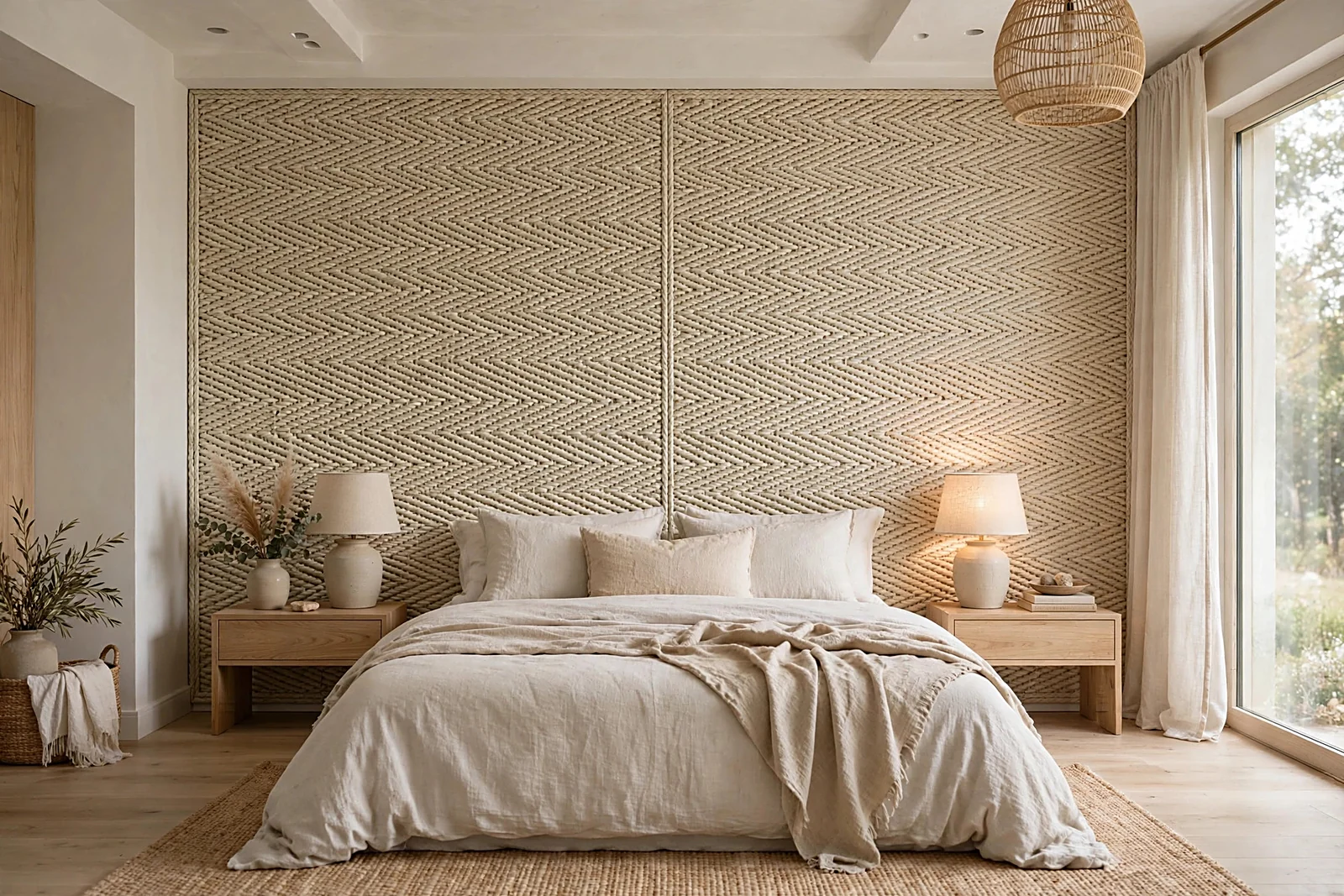
Paint gives color. Wallpaper gives pattern. Panels give depth — real shadow lines, real texture, a surface that changes with light and can carry concealed wiring and LED lighting. That is why the comparison is not fully fair: on the wall people photograph — the TV wall, the bed wall — panels are not competing with paint as a finish, they are competing as furniture for the wall. If all you want is a fresh color, paying panel money is waste. If you want the wall itself to be the design, paint and wallpaper are printed or flat imitations of that depth, and most homeowners feel the difference the moment they stand in the room. Material personalities differ too — PVC vs wood vs MDF compares the three panel families directly.
So which one should you choose?
- Choose paint if: you rent without permission for more, you may move or sell within about 3 years, you love changing colors, or the wall is a low-impact background wall. Paint is the right, honest answer surprisingly often.
- Choose wallpaper if: you want a specific pattern or mural look, the room is dry and well ventilated (a bedroom, not a steamy bathroom), and you accept that removal one day will be slow.
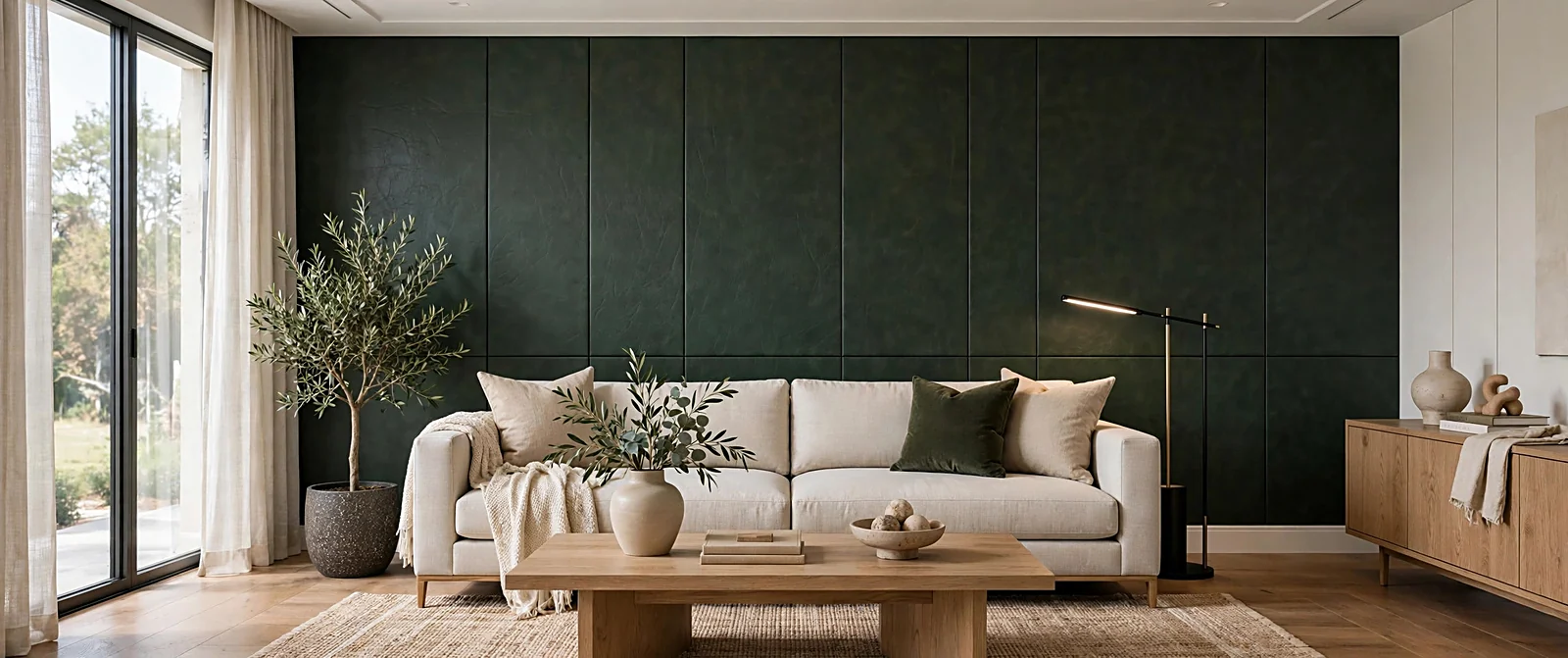
- Choose panels if: this is your home for the long term, it is the one feature wall the room is built around, the wall takes knocks (entry, TV wall, dining), or the room's humidity rules wallpaper out. Panels are a one-time decision that removes a recurring chore.
And the combination most South Florida homes actually end up with is all three: paint on most walls, wallpaper or a mural in one dry bedroom, panels on the single wall that carries the room. There is no prize for using one finish everywhere.
What we do at WallPanels Studio
We install panels, so read our conclusion with that in mind — which is exactly why this article gives paint and wallpaper their genuine wins above, with sources. When someone shows us a wall where paint is plainly the right answer, we say so during the consultation; a panel sold for the wrong wall is a future regret with our name on it. When panels are right, we help you pick the material family for the room's humidity, show you an AI preview of your own wall with panels before anything is ordered, and fix the panels mechanically where future access or removal may matter.
TL;DR (WallPanels Studio data)
Wall panels vs wallpaper vs paint: paint costs the least upfront (published US ranges about $1–$4 per sq ft installed) but lasts the shortest — a fresh coat every 3–7 years, so it is bought 2–3 times per decade. Wallpaper lasts 10–15 years in dry rooms but is the most humidity-sensitive finish: seams lift and bubble in South Florida damp air, repairs rarely stay invisible, and removal is slow. Quality panels cost the most upfront (about $3–$9 per sq ft for PVC, $5–$15 for wood/MDF, $10–$32+ for stone-look, installed) and last the longest — 10–20, 15–30 and 20–50 years respectively — so over 10+ years their total often meets paint's repeated cost. Choose paint for short horizons and color changes, wallpaper for pattern in dry rooms, panels for the long-term feature wall — especially a humid-climate TV or entry wall in Fort Lauderdale, Boca Raton and across Broward County, with PVC where moisture is a factor.
Free design consultation — send a photo of your wall through our wall form and see it with panels (AI preview).
Sources: Lankoe, wall panels vs paint cost and lifespan comparison (paint $1–$4/sq ft installed, 3–7 years; PVC panels $3–$9, 10–20 years; MDF/wood $5–$15, 15–30 years; stone/3D $10–$32+, 20–50 years); Angi, wallpaper vs paint (wallpaper lasts around 15 years with minimal maintenance, painted walls need a fresh coat every 3–5 years; wallpaper materials $1–$5 per sq ft, paint about $50 per gallon); Dezinebox / Medium, wallpaper vs paint durability (paint 5–8 years with good quality, wallpaper 7–10 years if well maintained, sensitive to moisture, heat and peeling). Full list: sources.md in this folder.
Illustration: AI-generated concept image — for illustration, not a photo of our real work.